July 7, 2010 — Breakfast

7/7/10

Breakfast

Following days of unrelenting heat and sun, the temperature peaked yesterday at 103.  Although the plants did not look stressed, I noticed last night that the most ripe blueberries on the bush were not as plump as they were last week.  I gave them supplemental water with the hose after sunset.   This morning, the berries looked a bit more turgid.  The flavor was quite different from last week’s harvest.   On balance, less sweet, and with a stronger blueberry flavor.  Very little of the dreamy subtlety, either in taste or texture.  Delicious nonetheless, and mercifully lacking the plastic undertones of the store-bought berries I had eaten for years.

Posted in Blueberries, Cooking and Eating, Meals and Menus | Leave a comment

July 6, 2010 — Dinner

7/6/10

 Dinner

First harvest of green beans tonight.   These are bush beans, small and scraggly plants.  I had not noticed the beans, which clustered on the lower part of the plant, and needed to be prompted by Annie and Melissa to begin harvesting.   There were obviously two types of beans – one straighter and more narrow, and another curved in the shape of a crescent moon and more plump.  Upon investigation in Annie and Melissa’s garden book and its accompanying seed packets, I see that the straight ones are Habichuelas fagioli, or “Stingless Green Pod Bush Type,” and the curved ones are “Bean Contender” (apparently also known as “Buff Valentine,” a variety that the seed packet helpfully notes was introduced in 1949).   Consulting Alice Waters, I cut a tiny sliver from the bush end of each bean, and plunged them in to rapidly boiling salted water.  Tasted at 2:30, and removed at exactly 3:00 minutes.  Per Alice, I drained the beans in a colander, but did not rinse with cold water.  Instead, I tossed them with some fresh parsley and olive oil, no salt.   The result was the archetype of al dente.  No crunch, but both firm and yielding.   No strings at all on either variety, and no identifiable seed within.  The texture was most pleasing.  I tried to find and linger over a “green bean” flavor, but failed.  Pehaps too much parsley, or perhaps too subtle for my palette?  Would salt have brought out the flavor?

Posted in Green Beans | Leave a comment

June 29, 2010 — Breakfast

6/29/10

Breakfast.

Bumber crop of parsley.  Sauted parsley in a tiny bit of canola oil, and then added fresh picked spinach.  Spinach is starting to shoot, but many leaves remain around the edges of the plant.  Paler than the young leaves, but no less tasty.   Color restored to dark green after 30 seconds in the pan. 

First harvest of blueberries.   A few large, plump berries had fallen off the bush.  For some reason, the berries on the lower branches seem to have ripened first.    “Chandler,” on east side, is bearing most heavily at this time.   Only one or two blackberries were black.  Many raspberries have turned a raspberry color, but only a few in each cluster have turned dark.  These are sweetest.  I will wait for raspberries.

Gathered blueberries in colander, and gave them a quick rinse.  Then eat plain in bowl.   About 90 seconds from bush to mouth.  The overwhelming impression was of the sun.  Each berry seemed to have absorbed the essence of the last two hot and humid days.    Neither sweet nor sour – the predominant flavor was blueberry.  Warm blueberry.  Blueberry never refrigerated.   The texture was far softer than any blueberry I have ever eaten.  Not soft in the mushy 10-days-in-the-fridge sort of way,  but melt-in-your-mouth soft.   The berry surrenders with soft pressure and releases a shot of flavor.

Does any billionaire in Manhattan today enjoy a more luxurious morning?   What is a gold-plated shower, or even a Picasso in the bathroom , compared to this?  What a journey.  The native Americans of Manahatta would have risen from this spot on a late June morning and wandered to a nearby blueberry patch for breakfast.    Now, 400 years later, man and blueberry are rejoined on the island, on a green roof mirroring, 35 stories in the sky, the land below that had lain encased in a concrete tomb for most of that time.  A resurrection.  If every building I see had a green roof, the entire island could be resurrected, pushing up through the street grid, reborn closer to the sun.


Posted in Blueberries, Cooking and Eating, Herbs, Meals and Menus, Parsley, Spinach | Leave a comment

Seen from the Battery Roof-top Garden

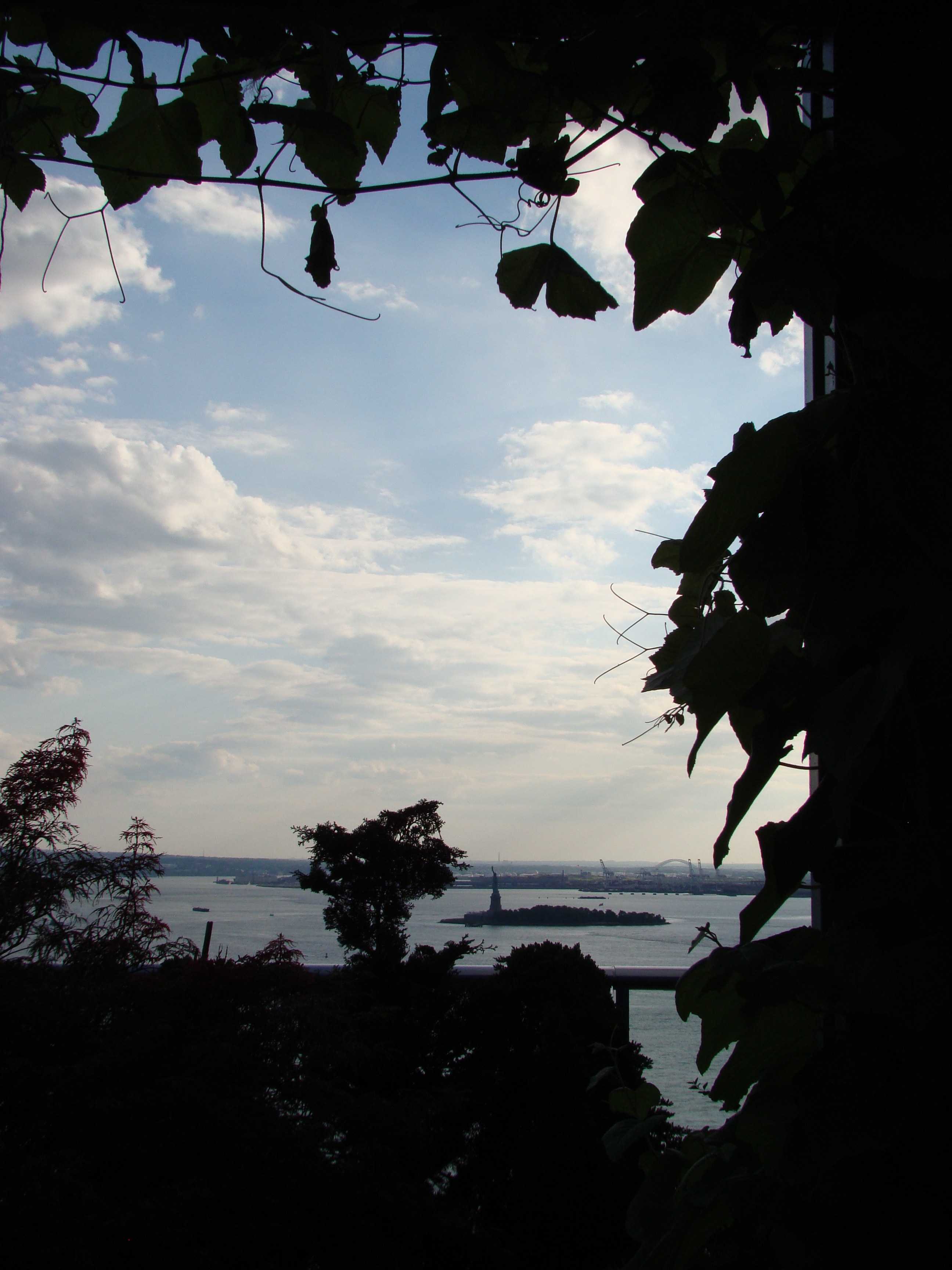
Battery Roof-top Garden is definitiely a garden room with a view.  The gardener looks down on the Statue of Liberty (physically, that is, but with the utmost awe and respect):  


The Statue is beautifully framed by a grape (Vitis labrusca 'Mars') growing on the south end of the Pergola.


Ships of all sorts pass beneath the garden:  

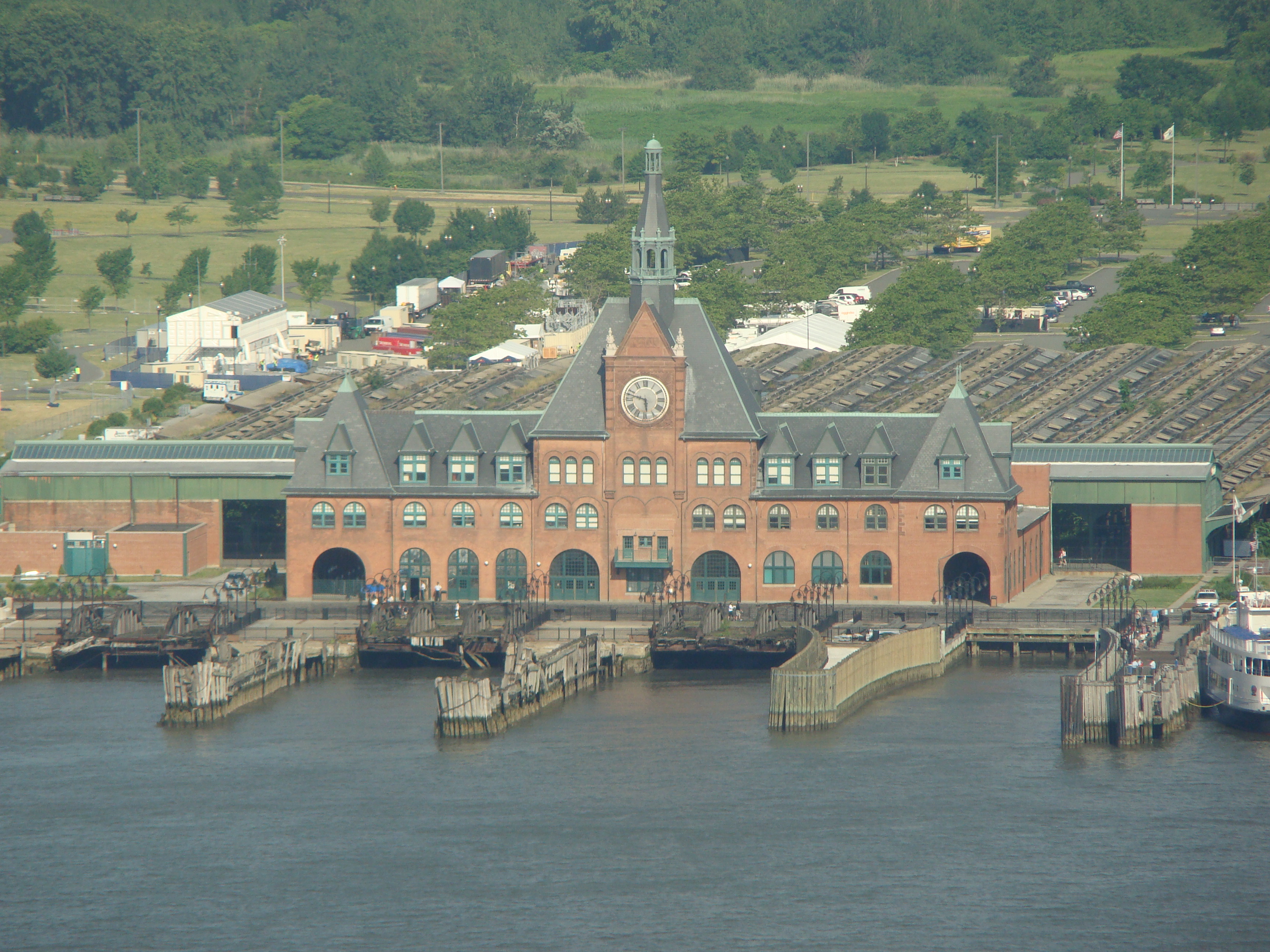
The gardener takes pleasure in the views of his ancestral home land, the Garden State of New Jersey.  This handsome building was built as the terminal for the Jersey Central Railroad:  


Posted in Photos, Seen From the Battery Rooftop Garden | Leave a comment

Battery Berries

The Battery Rooftop Garden includes three varieties of berries (two mid- and one late-season bearing), one variety of blackberry, and two varieties of raspberry.  The spread-sheet below shows information about the varieties selected.  Future posts will include photographs and tasting notes. 

Plant Type Height Soil Culture Pruning Fruit Harvest time Other
Vaccinium corymbosum ‘Chandler’ Hybrid northern high bush blueberry 5-6’ -Soil ph must be below 5.5, but 4.5 to 5.0 is optimal-Soil high in organic matter, on sandy side

-Sand/peat mix works well

-All hardy in zone 5 (Bluecrop to Z4)-Like 3” of mulch

-Needs very wet well drained soil, so perhaps drip both below and above?

-Full sun

-Do not prune first 3 years-Prune late winter, removing twiggy growth, leaving main stems v. large fruit Mid- to late-season Bearing plants 3-4 years, so buy size larger than 3 gallon (usually 2-3 year)
Vaccinium corymbosum ‘Darrow’ Hybrid northern high bush blueberry Shorter than Chandler, probably 4-6’ Large, nickel size fruit, sweet robust flavor Late season
Vaccinium corymbosum ‘Bluecrop’ Hybrid northern high bush blueberry Upright, 4-6’ Medium/large fruit, flavorful Mid-season
Rubus Canadensis ‘Ouachito’ Blackberry 3-4’ with pruning (prune tips when 48”) – needs trellising/staking -pH 5.5-6.5, regular mix should be fine-organic and moist soil

-well-drained soil a necessity

-may need 2” water per week when bearing

-Canes biennial, bear on 2 year old canes-After harvest prune fruiting canes to ground

-Late winter, remove damaged canes and thin

-Summer, tip new, non-fruit bearing, canes

  Late June/early July U of Arkansas breeding program; pronounced WAH-shi-tah
Rubus idaeus ‘Caroline’ European raspberryEver/fall 3-4’ with upright form – may not need staking, but still may be desirable -full sun, hardy to Z4, but may need protection from winter wind -Large Far bearing, starting in late August Vigorous, Very productive
Rubus idaeus ‘Heritage’ Summer/continuous bearing red European raspberry 5-6’, thornless -Train 1 year old cane on trellis -Small fruit -June July-Repeat fruiting in Sept.  
Vitis labrusca ‘Reliance’ (north side) Seedless, heavy fruiting, red grape              
Vitis labrusca ‘Mars’ (south) Seedless, very cold hardy, deep blue              
Posted in Berries, Blackberries, Blueberries, Raspberries | Leave a comment

Construction Progress Photos

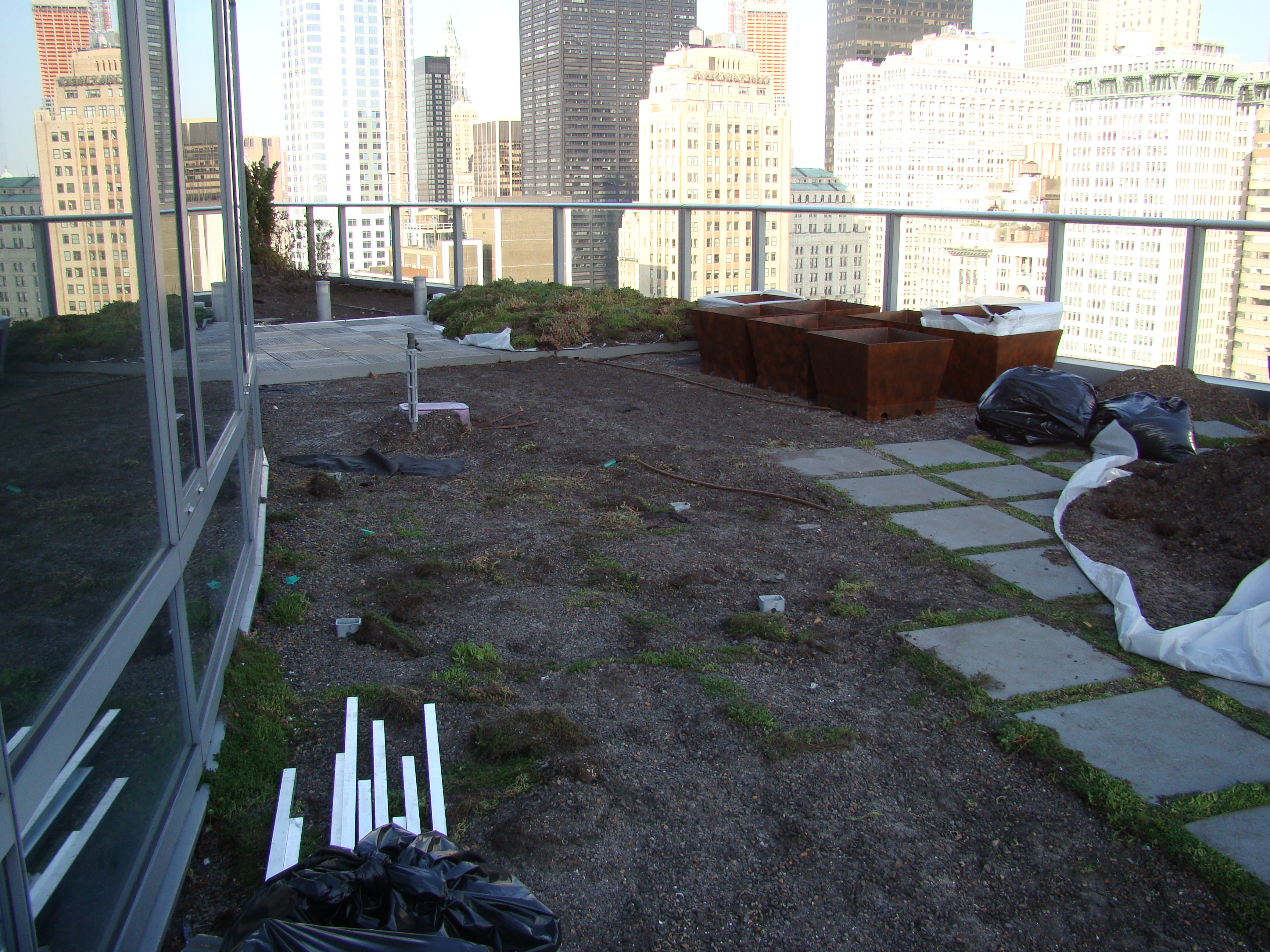
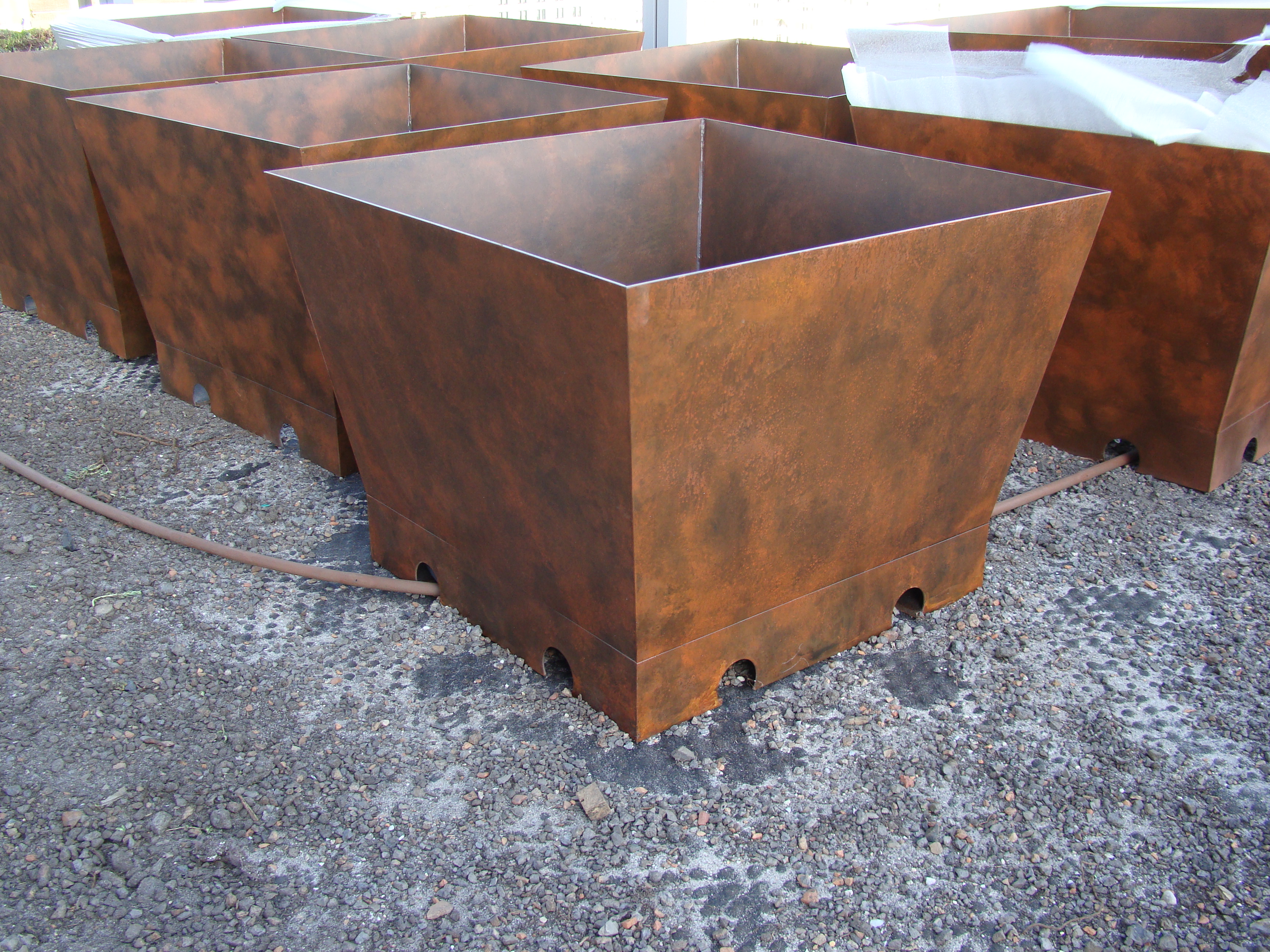
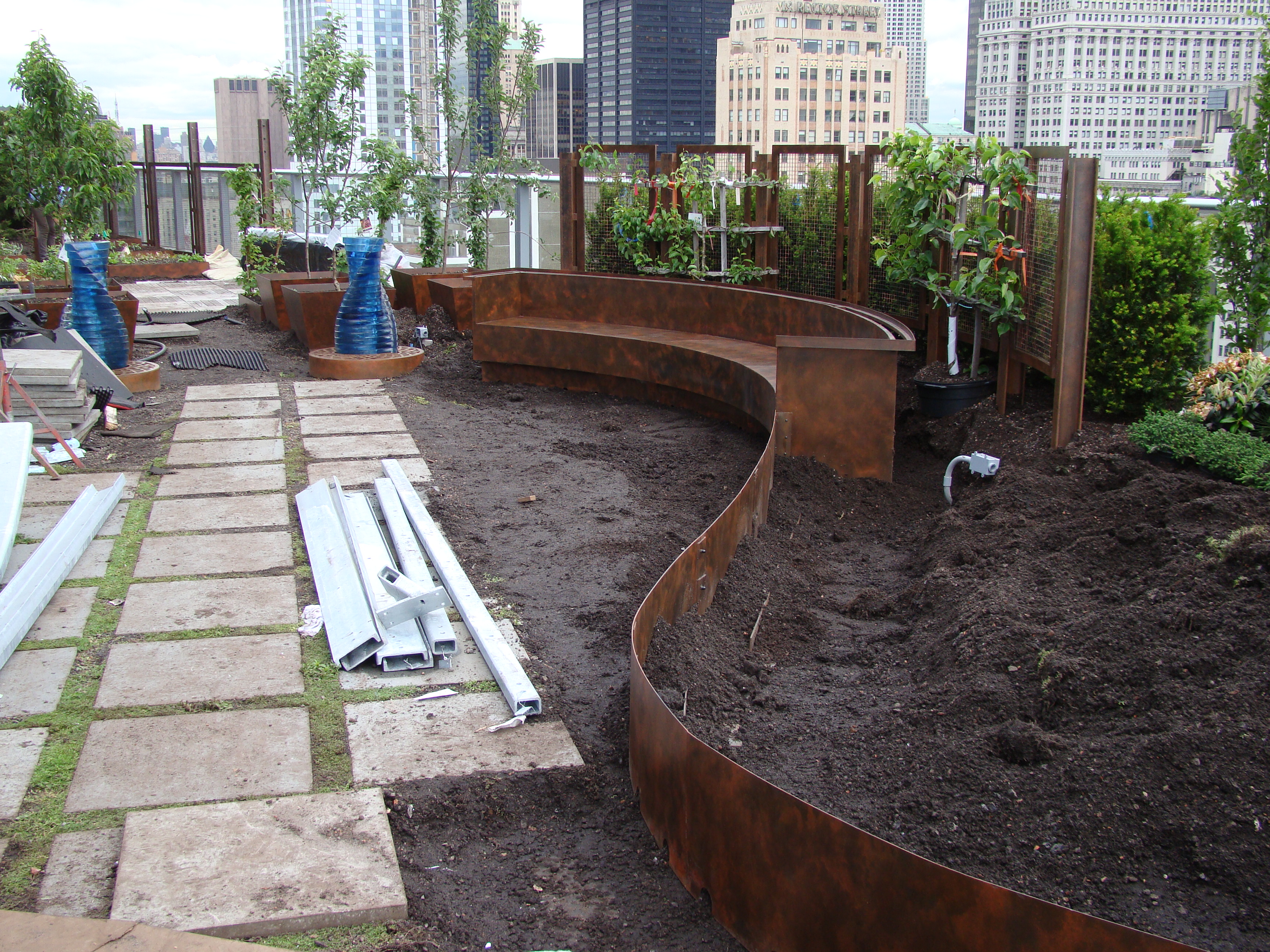
Construction of the green roof commenced in early March and was largely complete by late-May.  See “The Team” page for names of the designers and contractors involved.  Here, in chronological order, are some photographs of construction progress:

Below are the open-bottom planters for fruit trees.  On a green roof, all planters have open bottoms, to freely allow roots to penetrate the ground below the planter, and to allow water to freely flow:

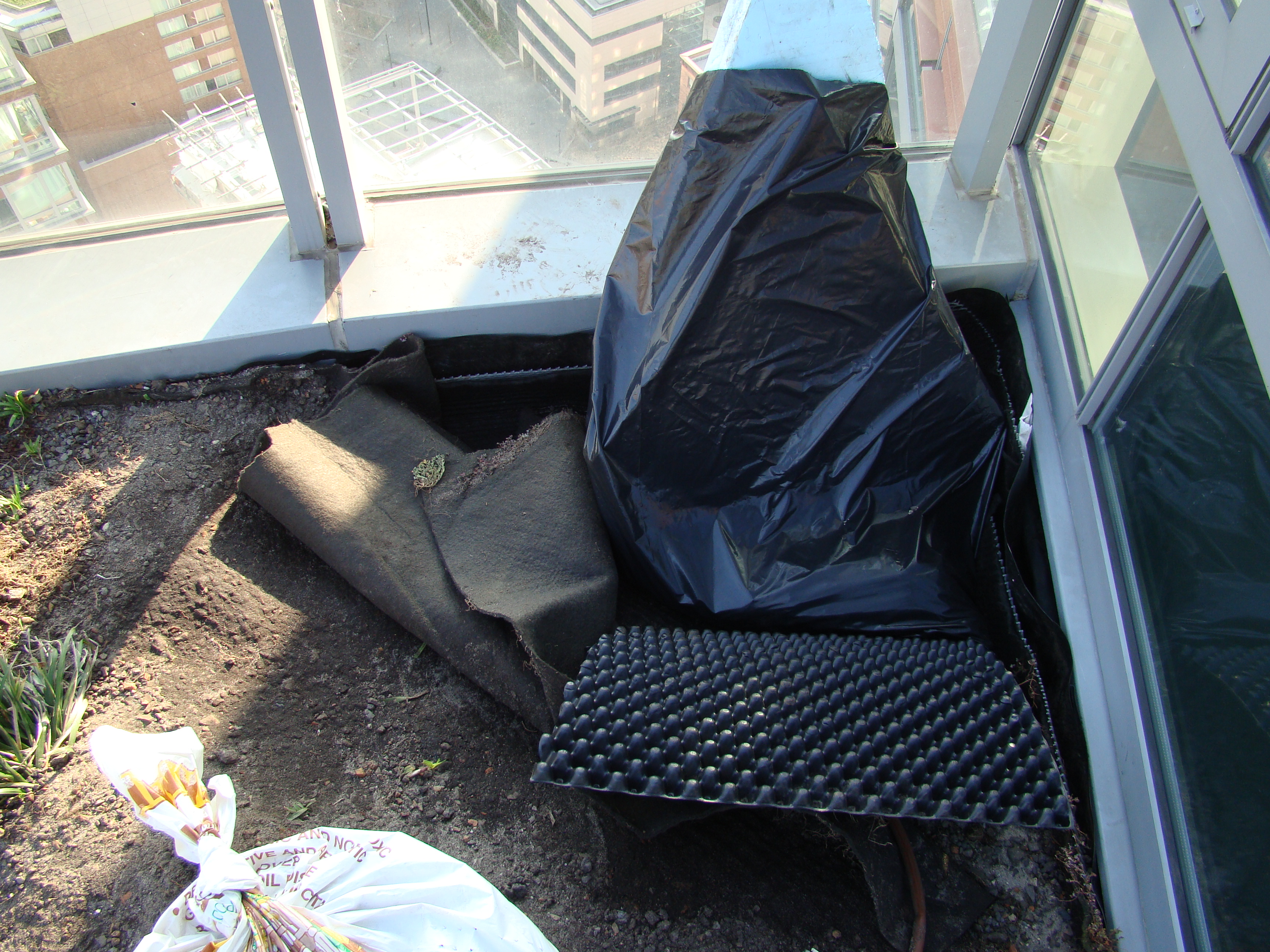
The roofing membranes, water-collection/drainage matt and root barriers were already installed on the pre-existing extenstive green roof, and were not changed:

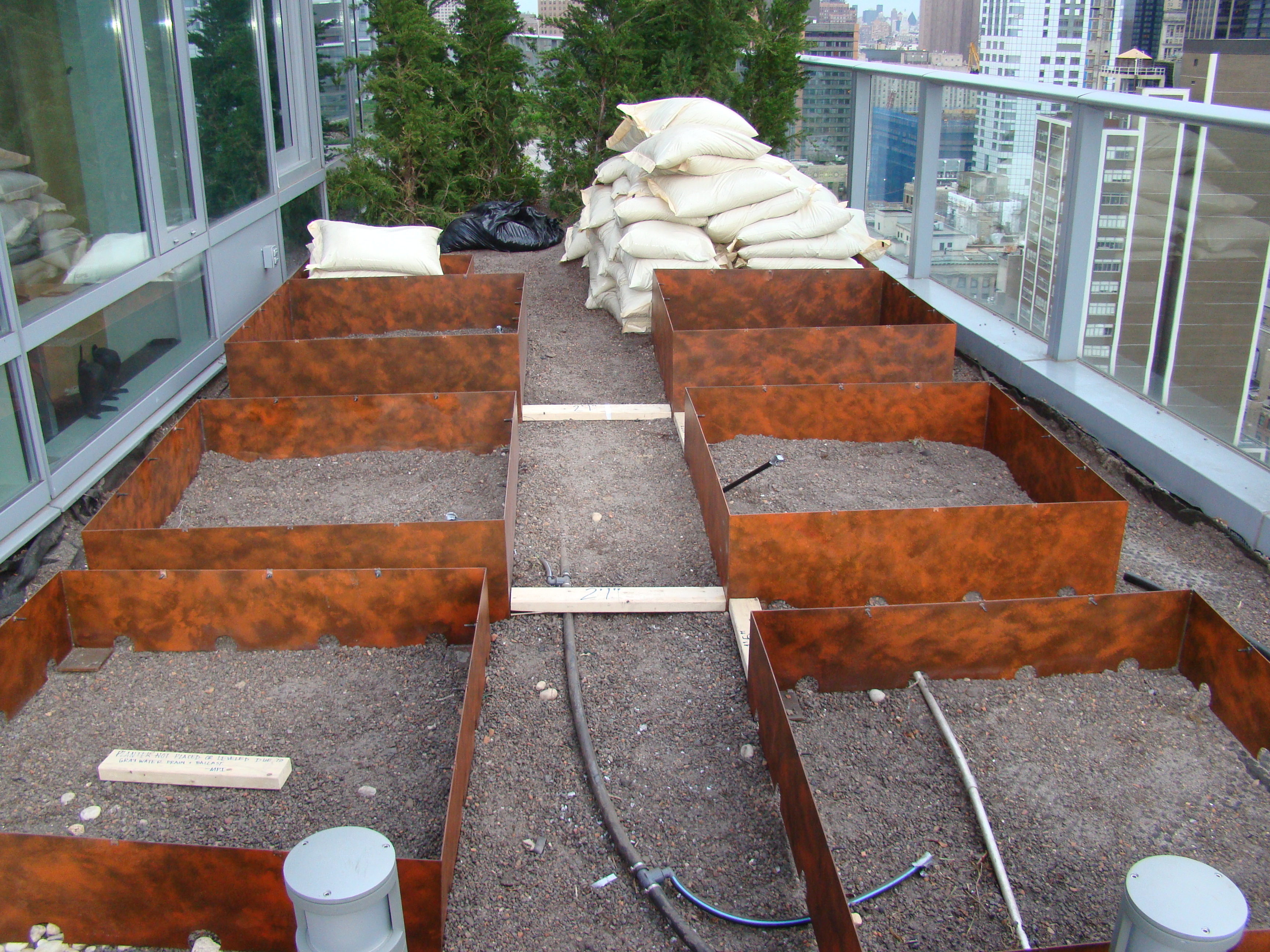
The open-bottom vegetables planters, with three different soil depths, were then set:

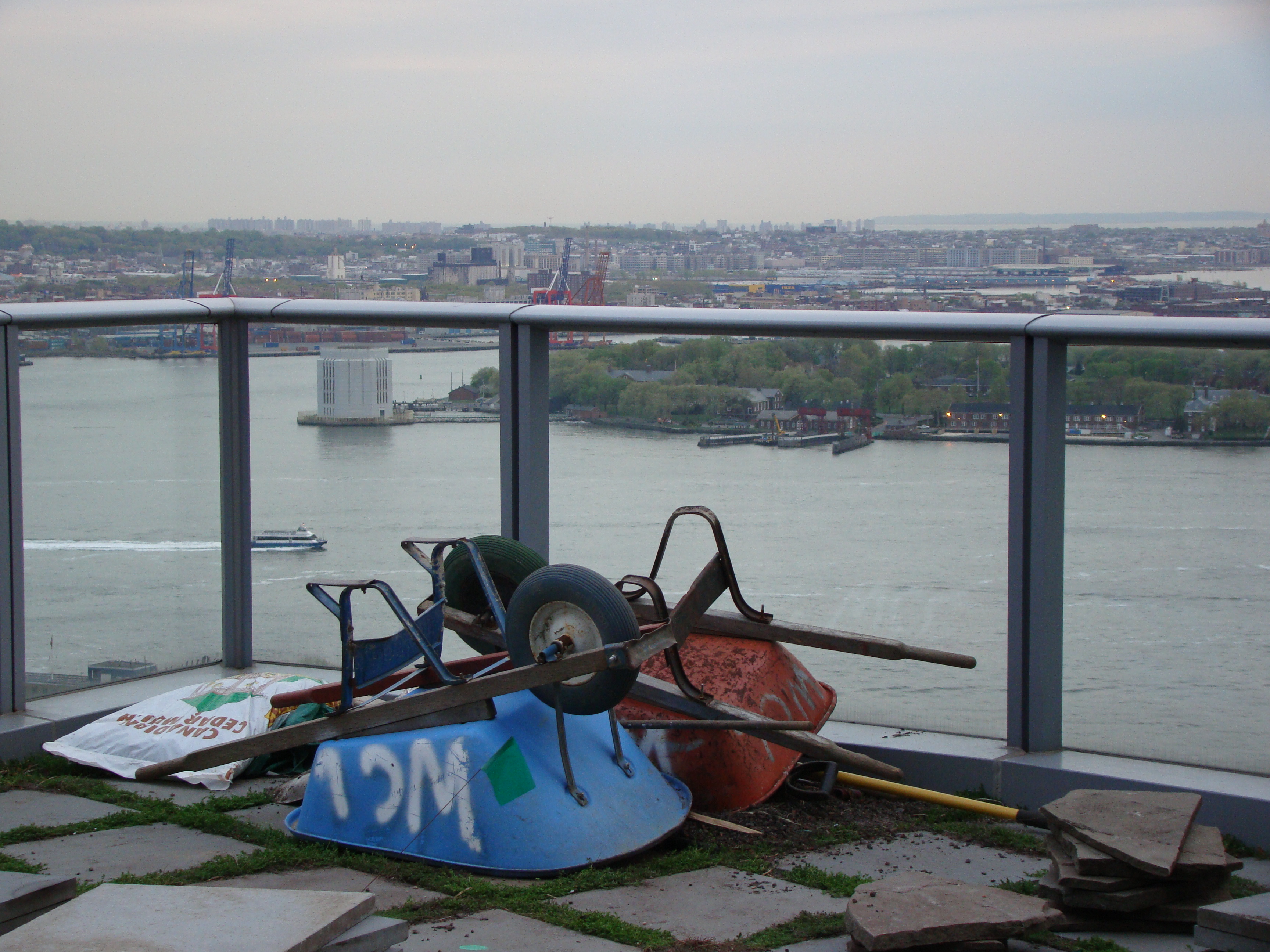
Wheelbarrows, not often seen on the 35th floor:


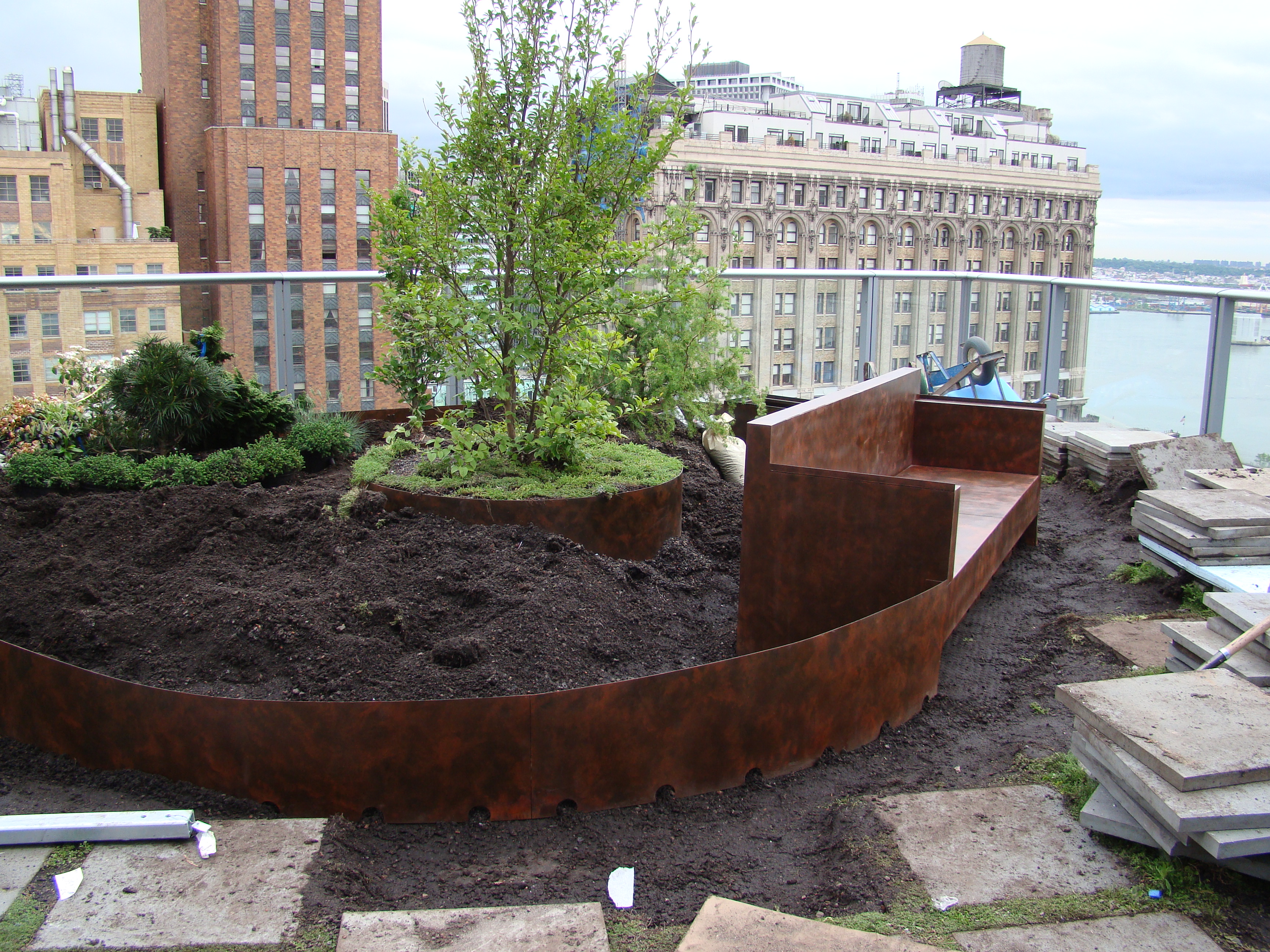
The east berm, as installed on May 19, 2010, with the taller cylinder for the Stewartia, and the support for the espalier:

Posted in Construction Progress, Design, Fruit, Photos, Structure | Leave a comment

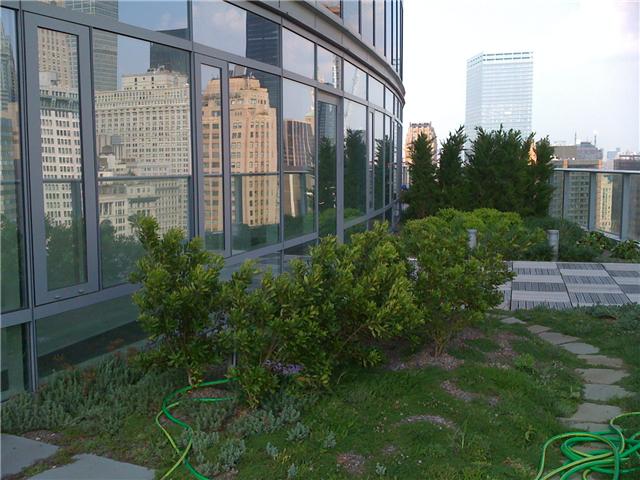
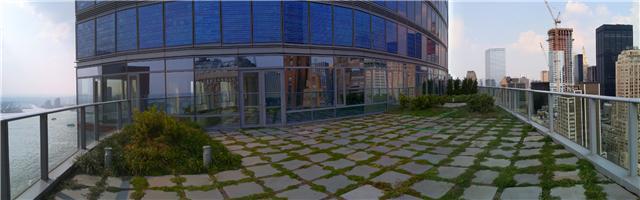
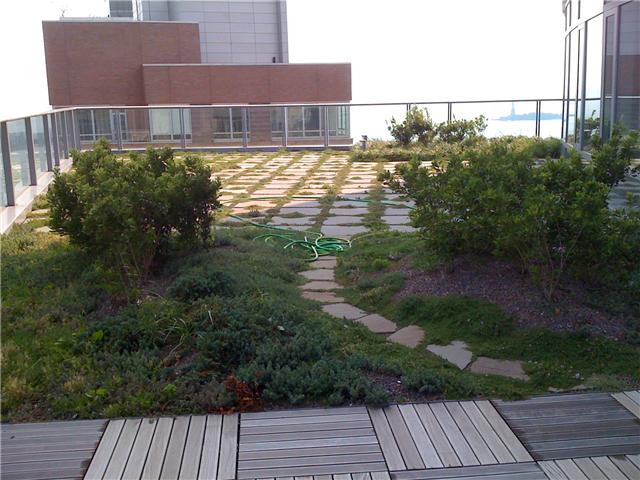
“Before” Pictures: The “Extensive” Green Roof Before Reconstruction

"Before": Original Green Roof Looking North

"Before": Original Green roof looking north and west

"Before": Original Gren roof looking south

Posted in Design, Photos | Leave a comment

Extensive vs. Intensive

An “extensive” green roof is one with relatively thin soils, most typically 3-4″, and thus planted with a limited mixture of plant materials, mostly those that are extremely drought tolerant, such as sedums.  An “intensive” green roof is one with deeper soil depths, and thus able to support a great variety of plants.  An “extensive” green has many environmental benefits, including insulation of the structure below and absorbtion of storm water.   But it lacks the many other benefits of creating a more complex ecosystem, with a variety of trees, shrubs and plants, able to replace the habitat and life that was extinguished when the building obliterated all life that had existed in its footprint, sequester greater amounts of carbon, support a more pleasing year-round variety of ornamental horticulture and, of particular interest to me, support the growing of plants for food. 

When I purchased the apartment, the roof had been finished as a typical “extensive” green roof, with drought tolerant ground covers and a few clumbs of the ubiquitous and pedestrian Bayberry (Myrica pensylvanica).  

Luckily, as a new building built to LEED “Platinum” standards, the roof deck was 14″ of steel reinforced concrete, with support columns at key points under the deck.  This allowed a variable increase in soil depth, with berms rising from the existing 3-4″ to as much as 24″ of depth in certain places.  The largest trees were placed over columns.

Posted in Design, Soil, Structure | 2 Comments