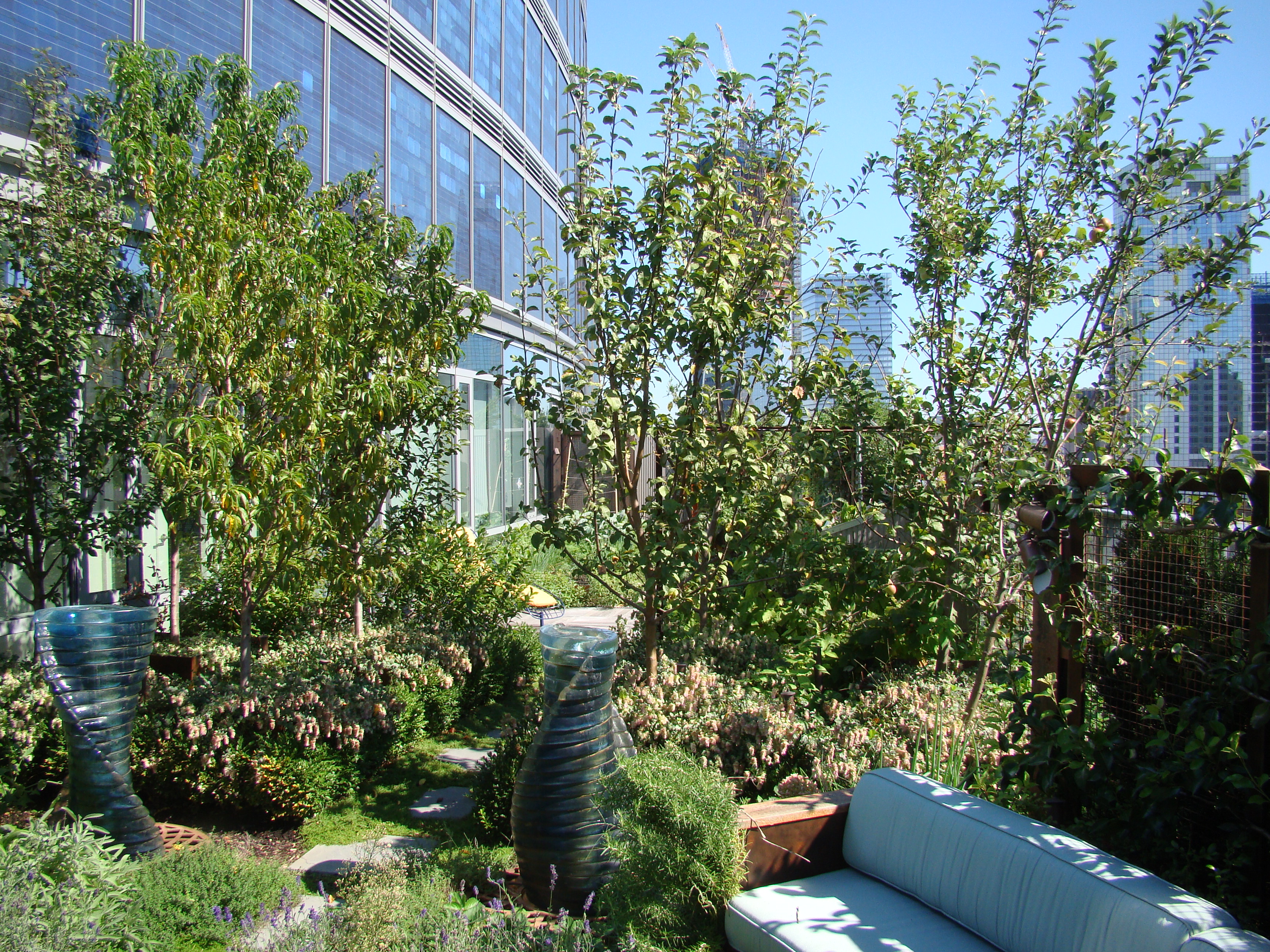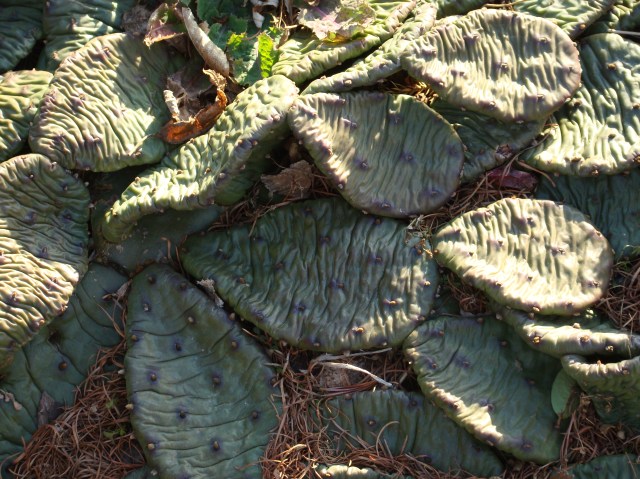
It’s spring, and a middle-aged man’s thoughts turn to . . .

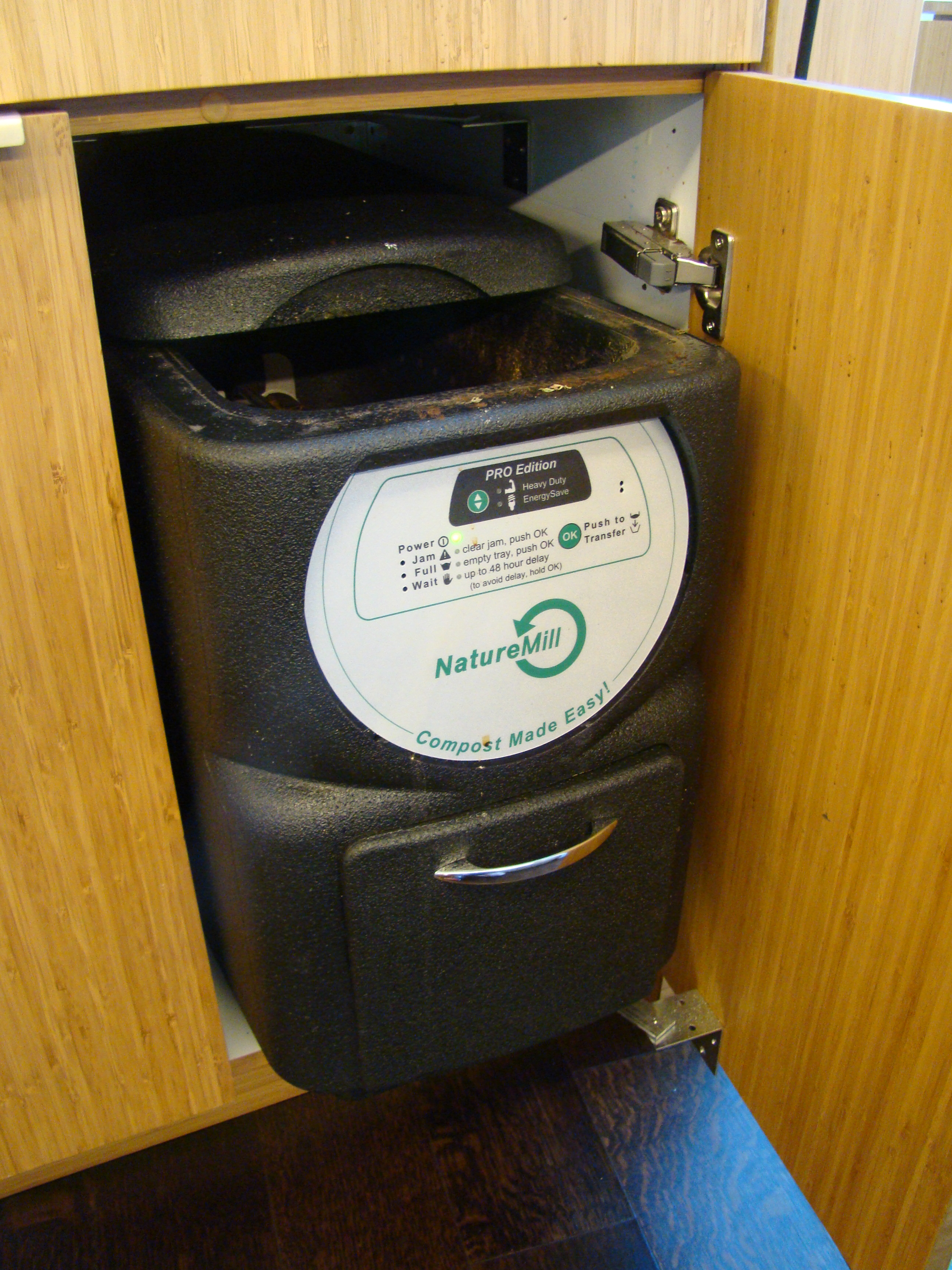
Compost, of course.    Here at BRTG, we are trying to provide the nutrients needed by our voracious vegetables by composting both kitchen waste and the excess organic matter put out by the ornamental part of the garden.   We have not yet succeeded.   But one element of the plan that is working is the NatureMill Automatic Composter:

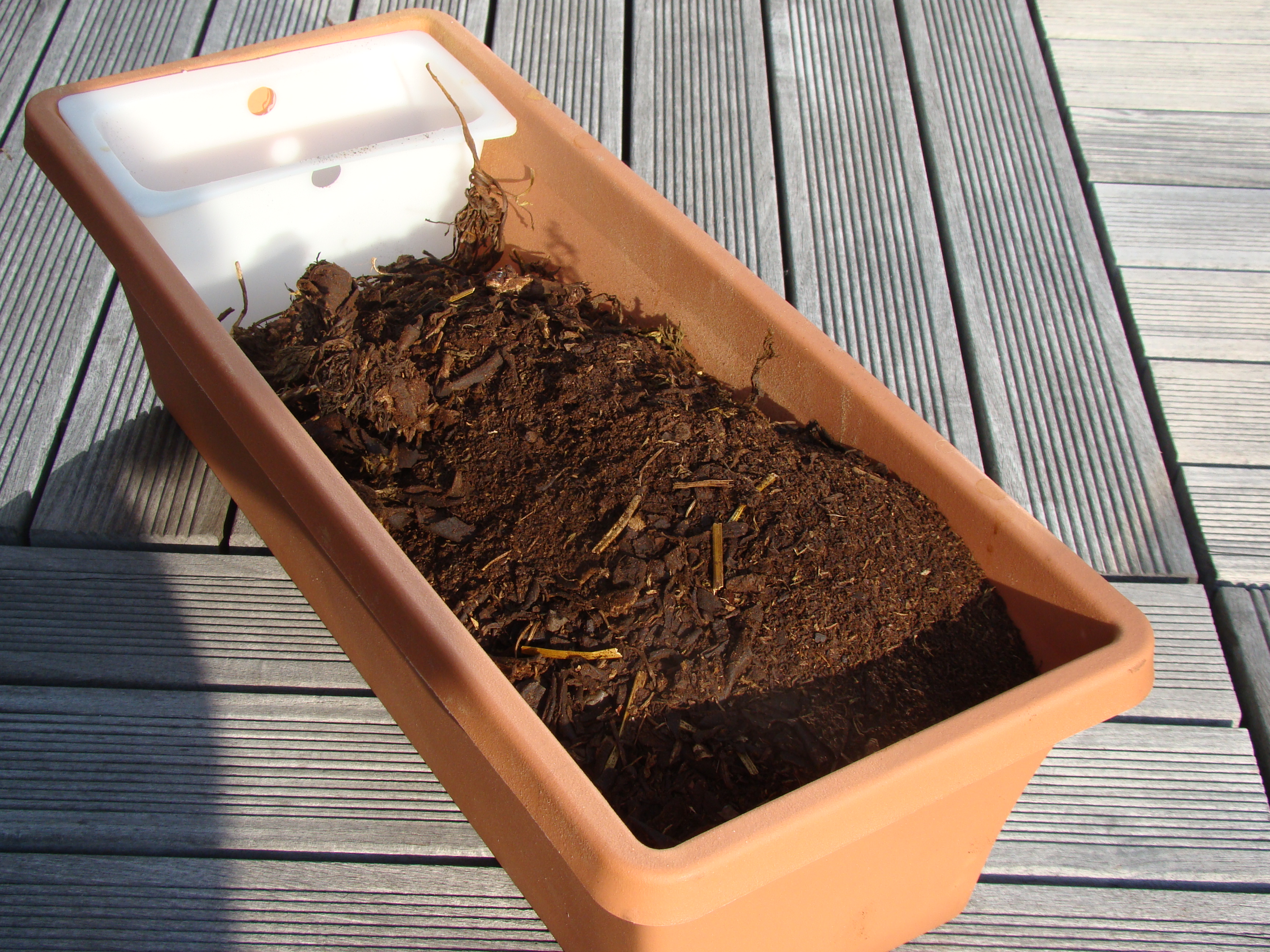
This small machine fits under a standard kitchen counter.  It uses very little power (a small blower forces extra oxygen into the composting chamber and an electric motor rotates the composting material every four hours).   Be sure to get the “Pro Edition,” which is sturdier and will last longer.   Be careful not to over-load.   The result speaks for itself:

Compost is pure poetry to a gardener, so I cannot resist leaving you with some Walt Whitman:

Behold this compost! behold it well!
Perhaps every mite has once form’d part of a sick person–yet behold!
. . .
Out of its little hill faithfully rise the potato’s dark green leaves,
Out of its hill rises the yellow maize-stalk, the lilacs bloom in
the dooryards,
The summer growth is innocent and disdainful above all those strata of sour dead.
. . .
Now I am terrified at the Earth, it is that calm and patient,
It grows such sweet things out of such corruptions,
It turns harmless and stainless on its axis, with such endless
successions of diseas’d corpses,
It distills such exquisite winds out of such infused fetor,
It renews with such unwitting looks its prodigal, annual, sumptuous crops,
It gives such divine materials to men, and accepts such leavings
from them at last.

Posted in Failures, Soil | 1 Comment

Contrast

We all know what a powerful thing it is to take man out of the city and into nature.   When an urban hipster – adapted to the ecological and cultural niche of Chelsea or Greenpoint – spends a week in the country, the dramatic change in context allows him to see himself in a whole different way.  

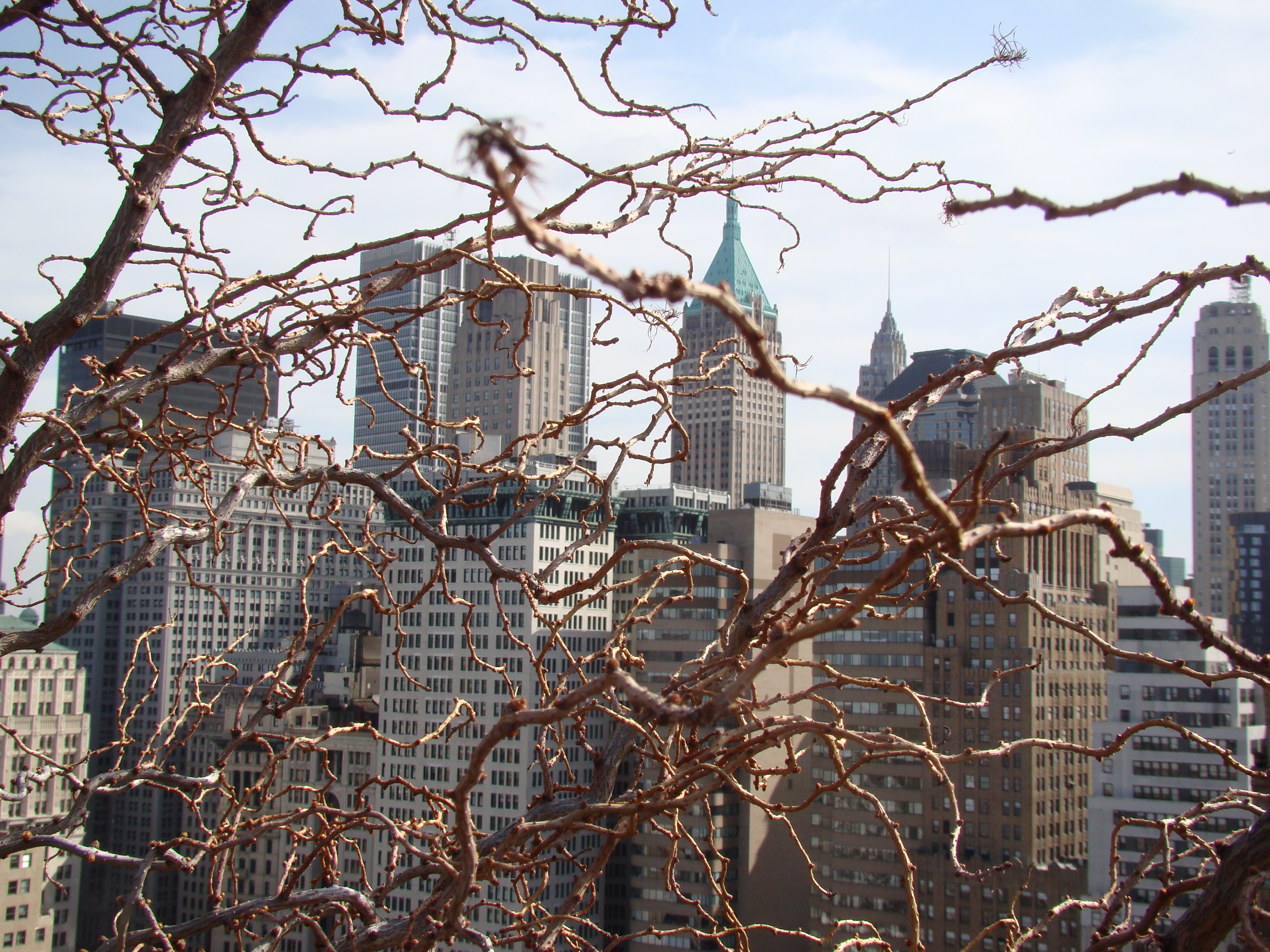
But what of taking plants out of nature?  Most of our urban parks are about creating the illusion of the country in the city.  Most park designers attempt to create ecological niches that mimic those in rural settings.  But rooftop gardeners have no such luxury.  Here on the 35th floor, there is no acidic oak forest, no marshy edge to a vernal pool, no woodland edge.    Instead, we have a uniform soil mix, perfectly drained, surrounded by glass and steel parapets and curtain walls, the concrete and brick towers of Lower Manhattan, and the 17,000 acres of New York Harbor. 

What’s a roof-top gardener to do?   Break the rules, of course, and revel in the insights gained by observing plants in a wholly different context.   

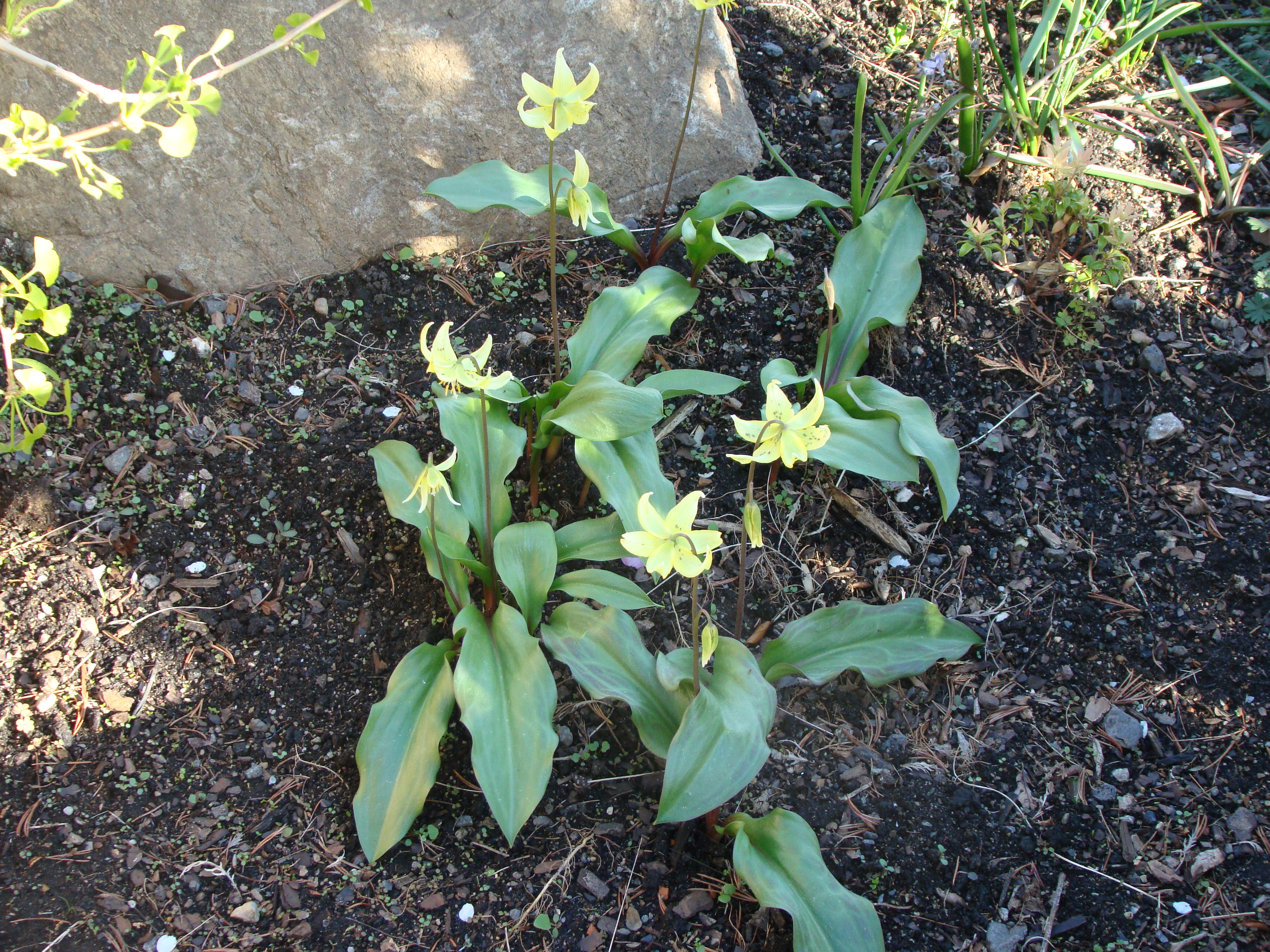
Yes, you saw right.  Erythronium americanum, the Trout Lily.   Any gardener will tell you that, as a woodland spring ephemeral, it must be grown in acidic fluff on the forest floor, exposed to early spring light, then allowed to retire for the summer among the roots, litter and shade of its arboreal hosts.    But here it is, on the 35th floor, with only a pruned Callicarpa for cover and companionship.  Like our urban hipster on his voyage of self-discovery in the woods, the Trout Lily’s urban adventure allows us to see it in a wholly different light.

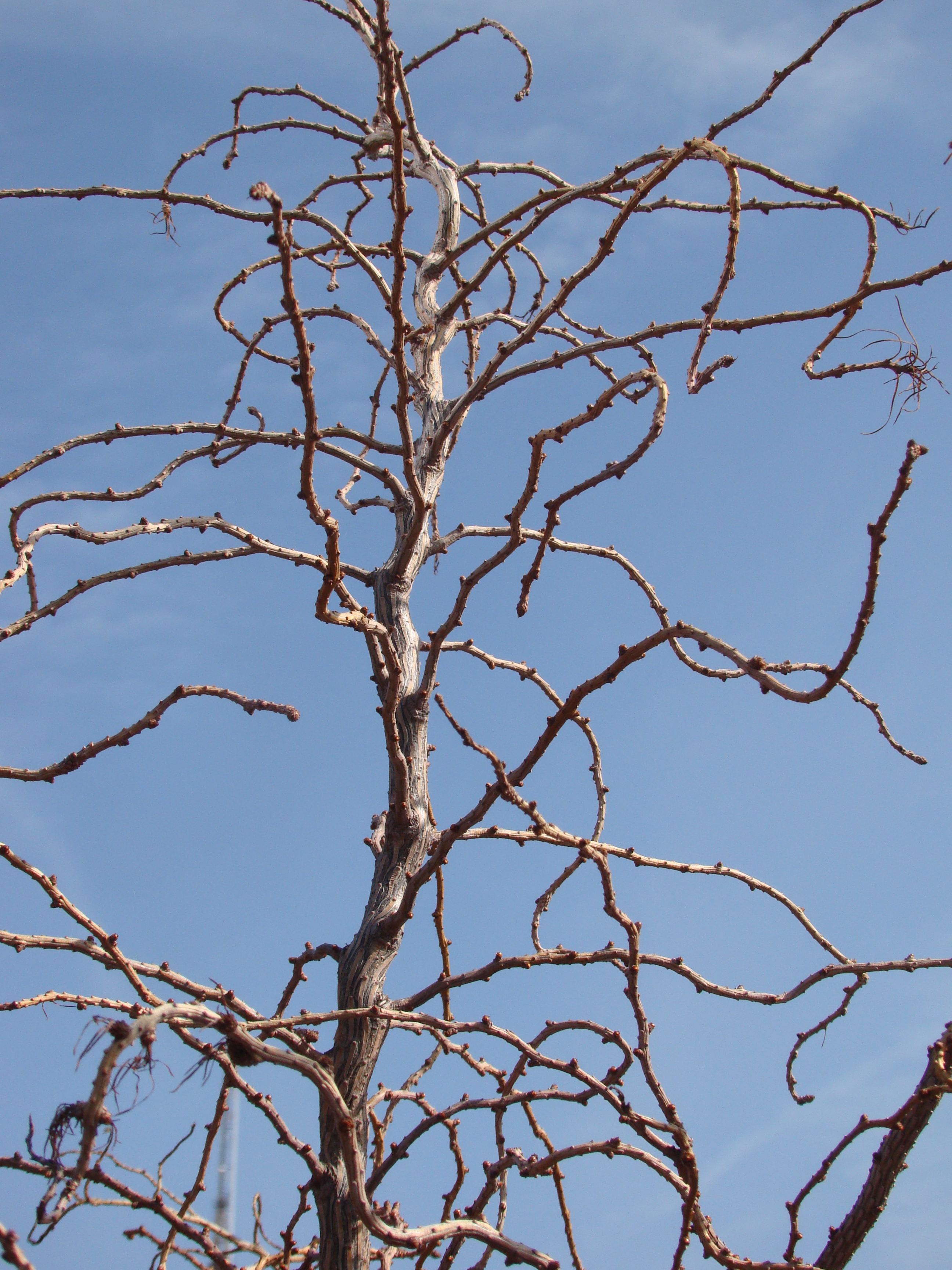
And that’s just the beginning.  Take the familiar Contorted Larch (Larix dicidua), here as we usually see it:

And now in a new perspective:

Who knew that this plant would look so at home in the city?  Or that the cityscape itself would be so enhanced by its presence.

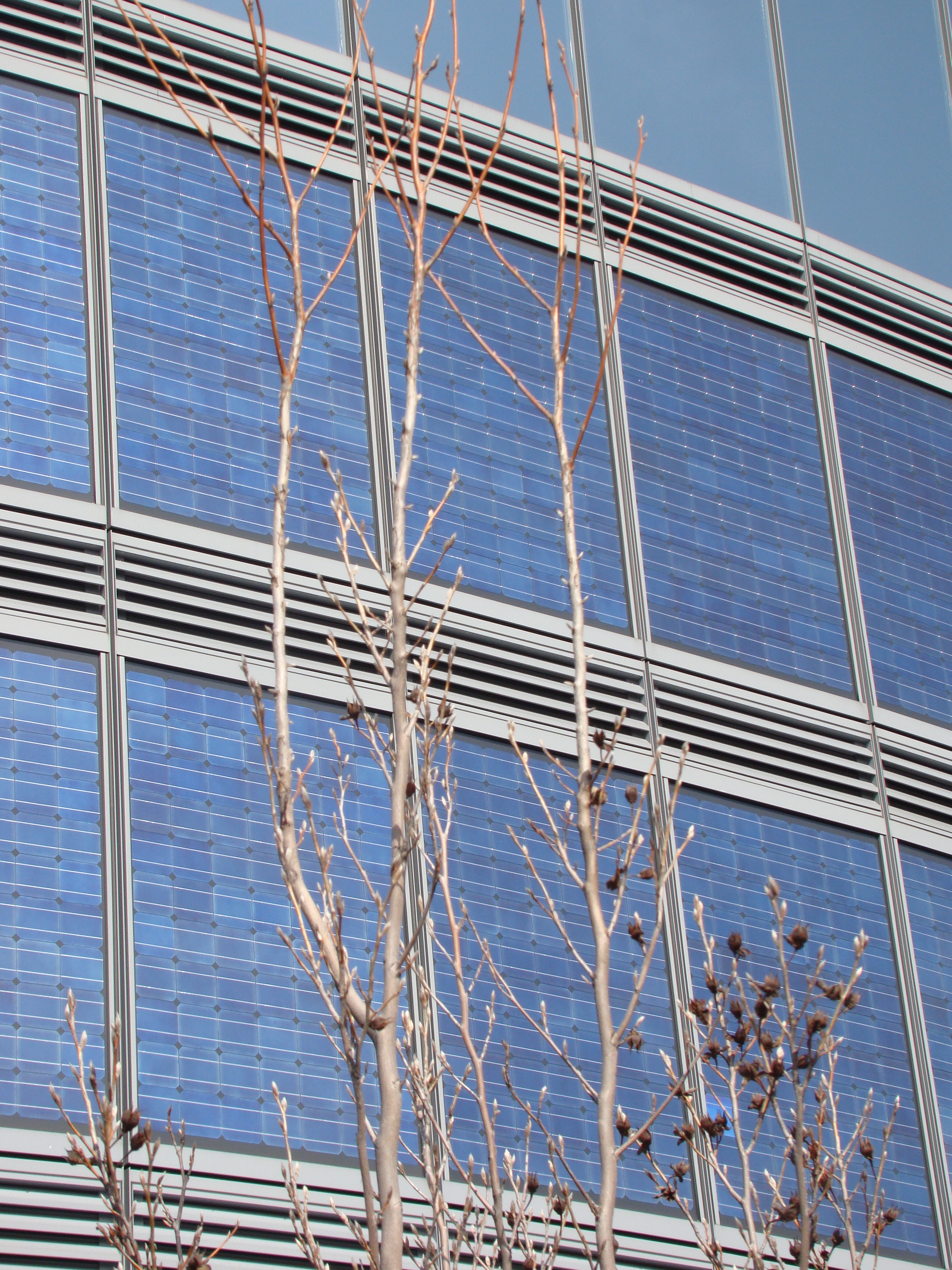
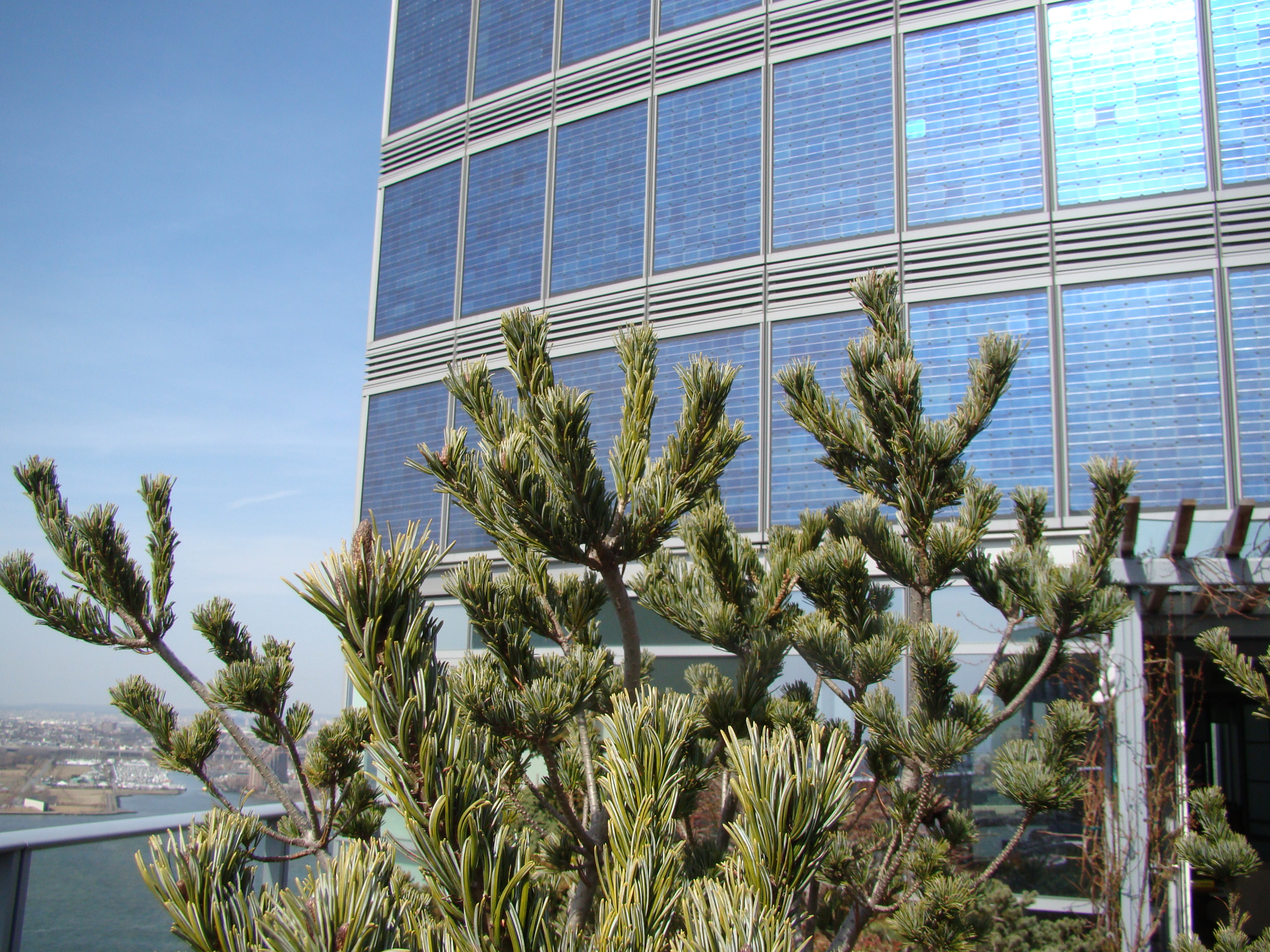
You thought you knew the Peach and White Pine.  Can you see something new about the character of these plants through the sharp contrast with technology?

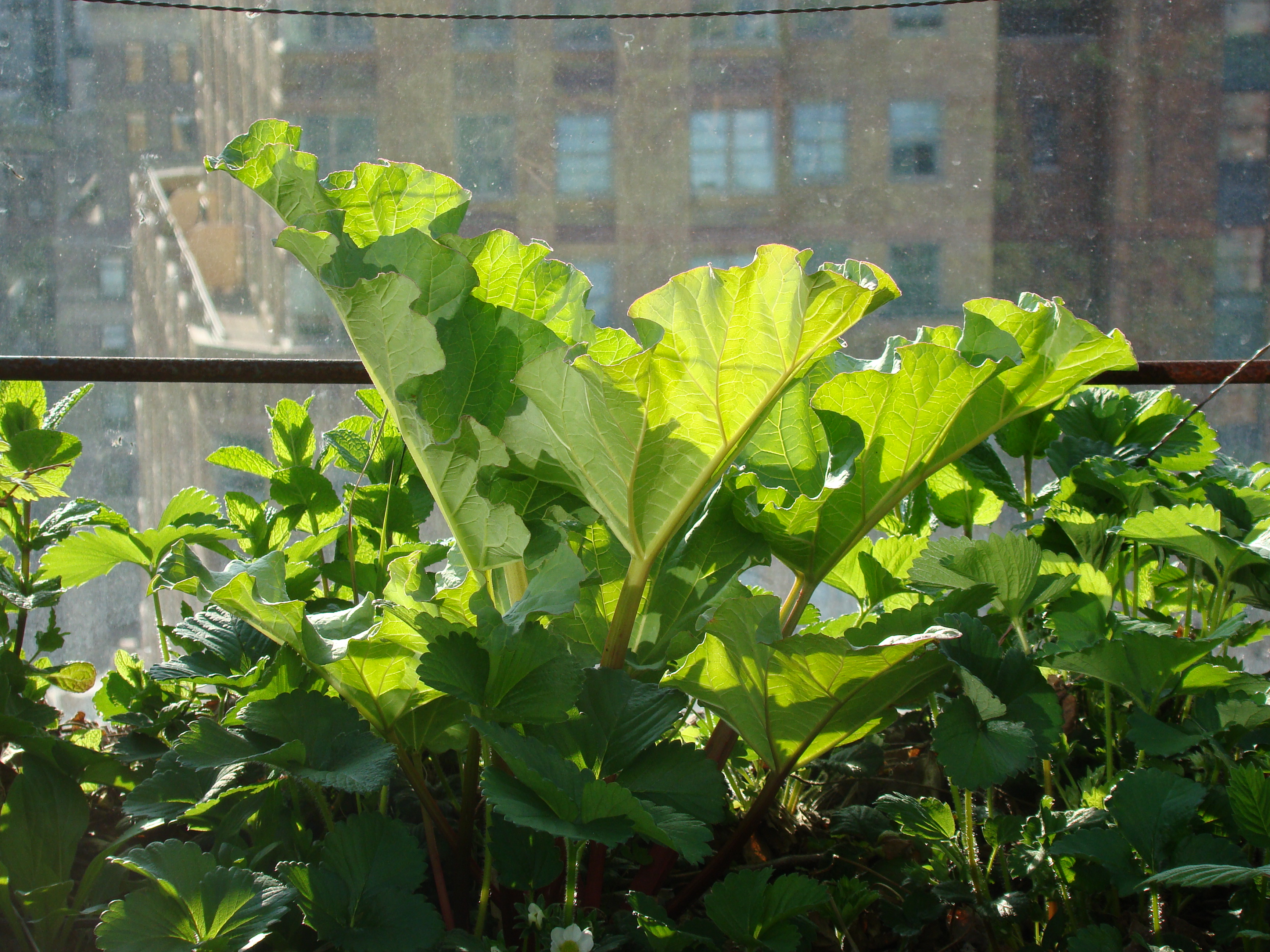
Even the ultimate country hick, Rhubarb, looks right at home among the high-rises of downtown.  

Rooftop gardens not only are teaching us about the possibilities for a different type of city, they are teaching us new ways to look at nature itself.

Posted in Design, Non-edible Bulbs, Ornamental Plants, Peaches, Photos, Rhubarb, Seen From the Battery Rooftop Garden | 1 Comment

Over-winter

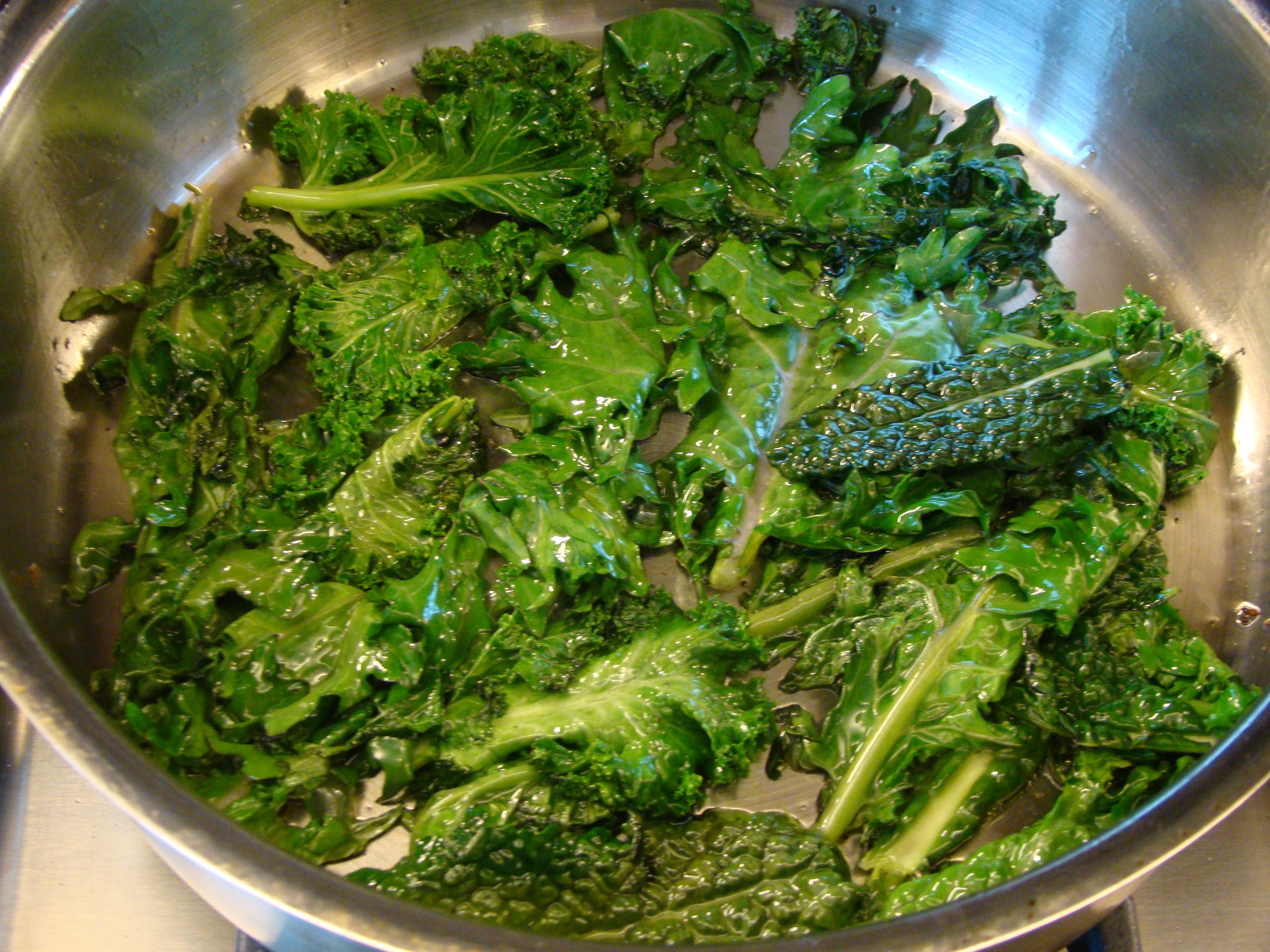
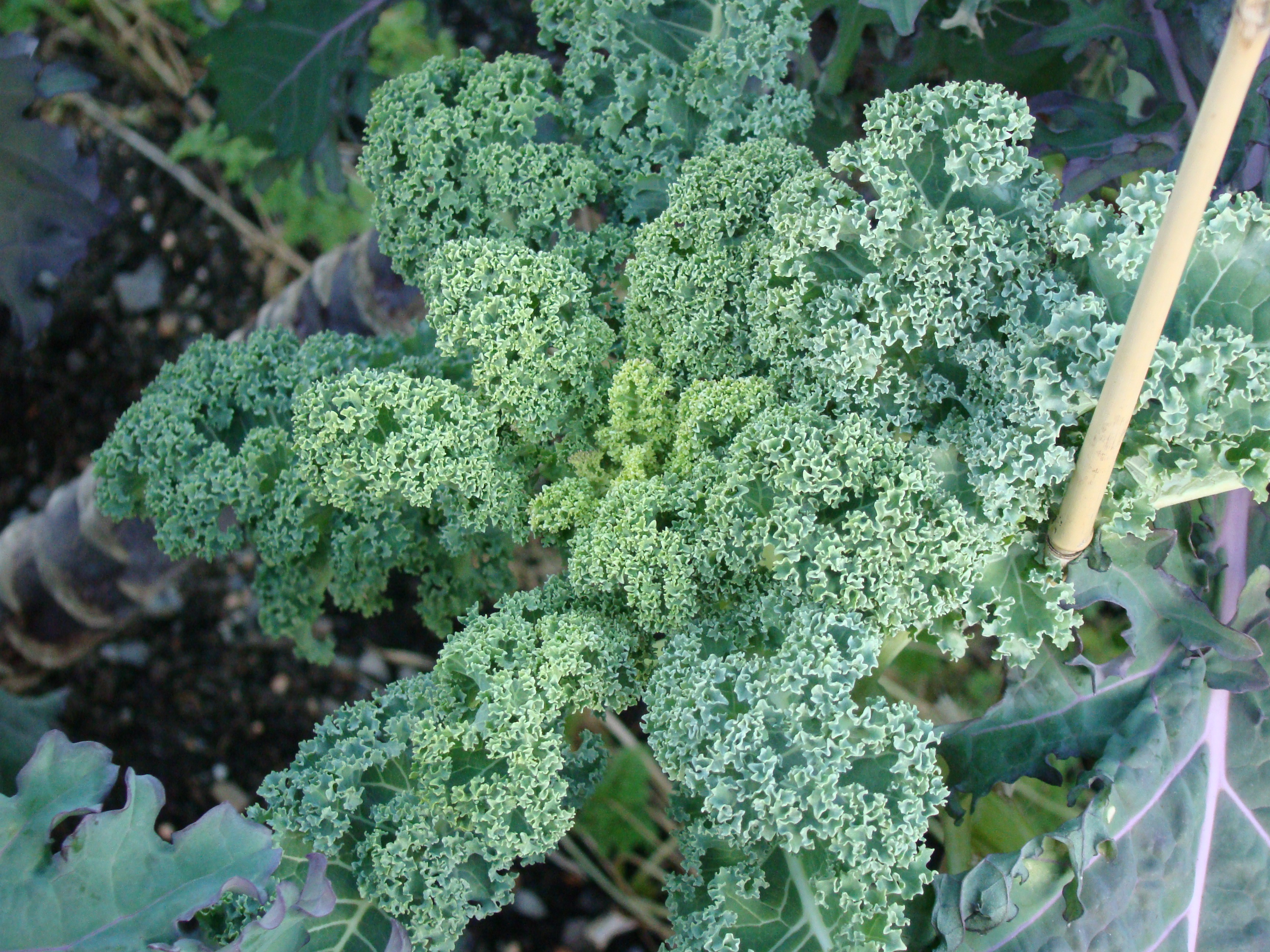
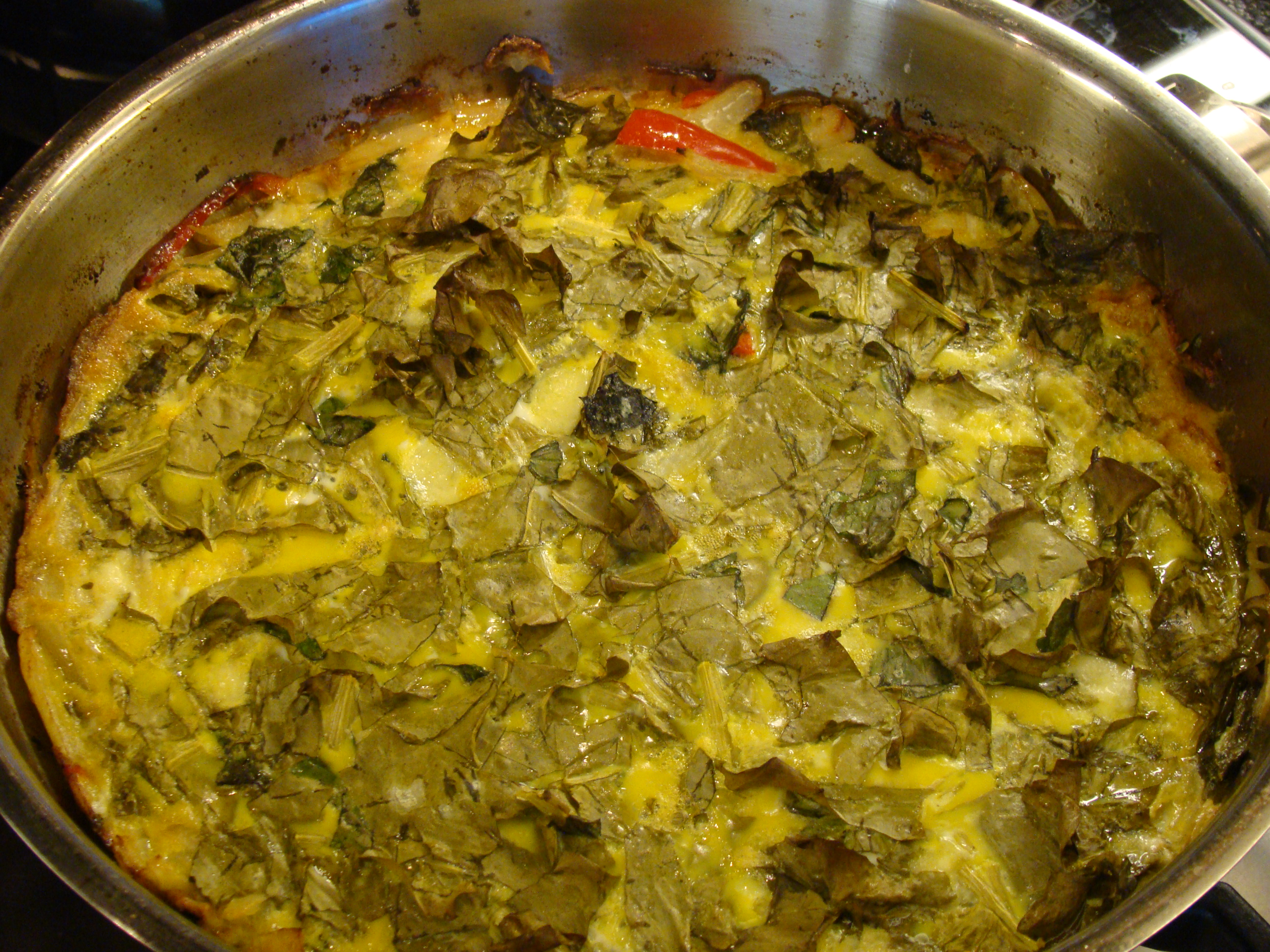
This morning I picked some baby kale leaves from the enormous over-wintered kale shrub and some older leaves from the over-wintered sorrel, gave them two stirs in hot oil, and added two fresh eggs.   The result was so outstanding that your desultory blogger was shamed into finally sharing with you the joys of over-wintering.

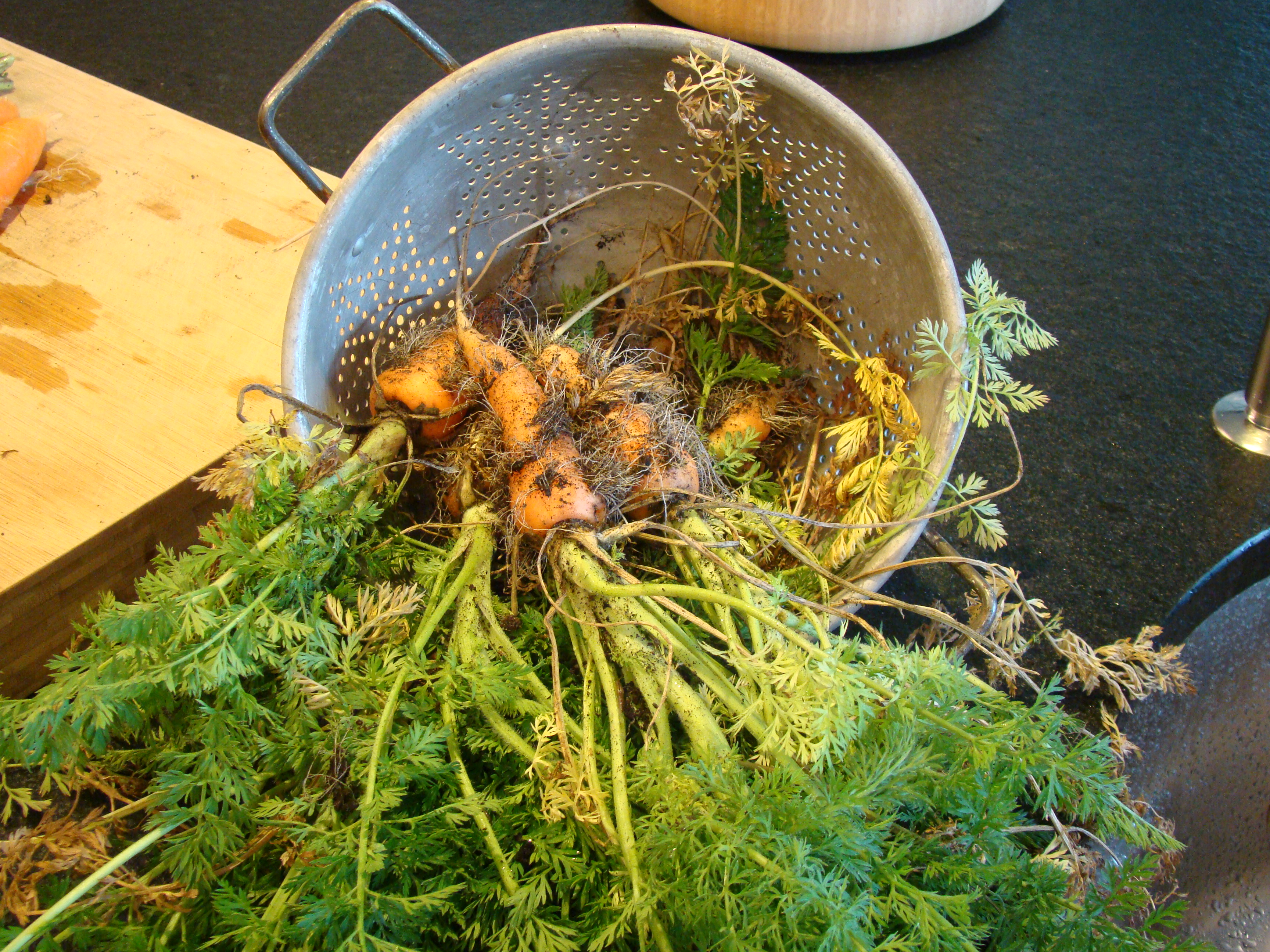
Web reviews of over-wintered vegetables are decidedly mixed, and harvesting plants that have spent winter in roof-top soil that has been generally soggy, and alternatively freezing and thawing, does require a sense of adventure.  Carrots, for example, emerge covered with small white roots:

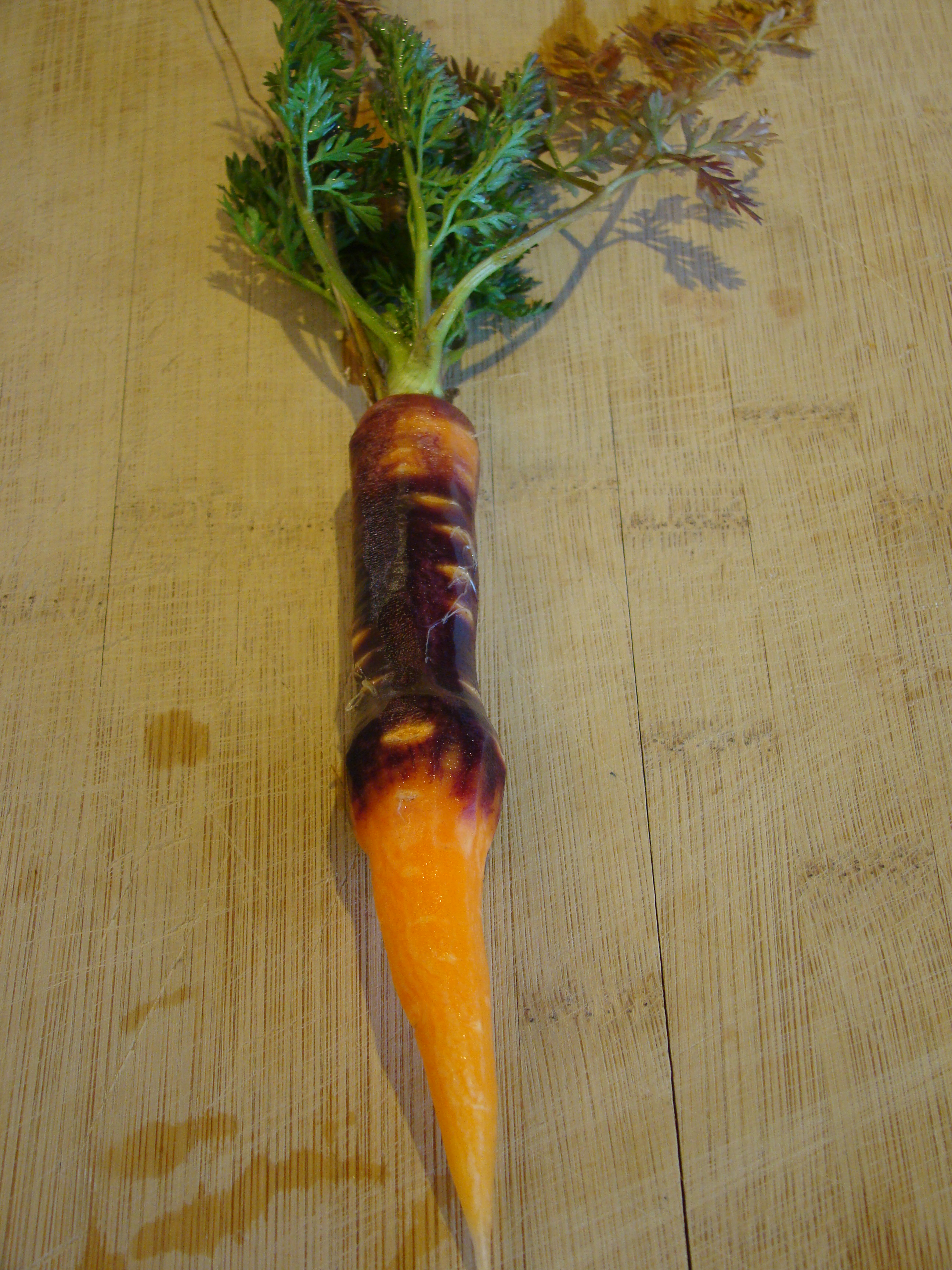
And some individual carrots exhibit strange behavior over the winter, putting on new growth that appears to be from a cultivar different from the original (does someone know the scientific explanation for this?):

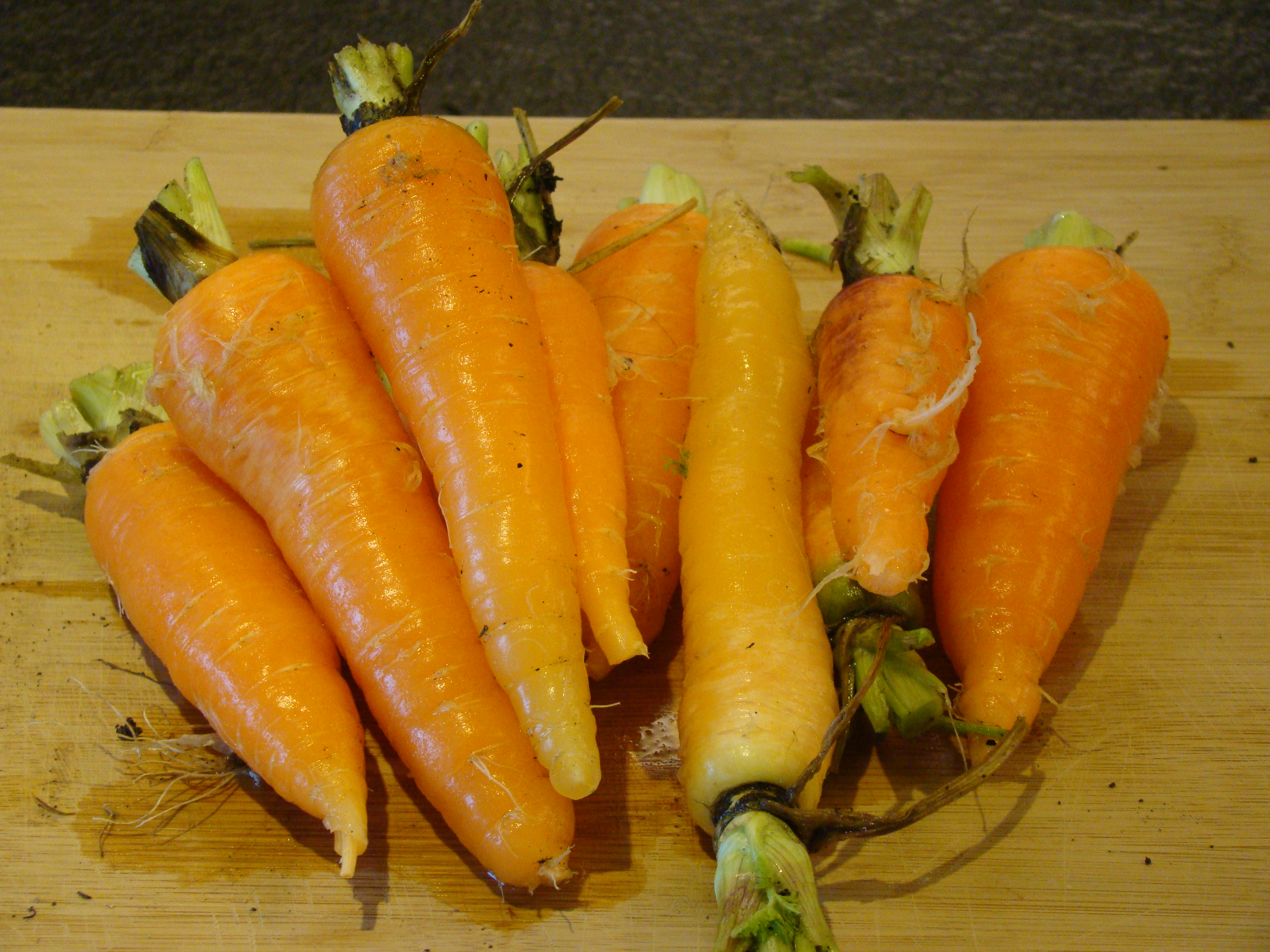
But a quick once-over with the peeler removes the roots, and I am happy to report that the result was exceptionally sweet and perfectly crunchy:

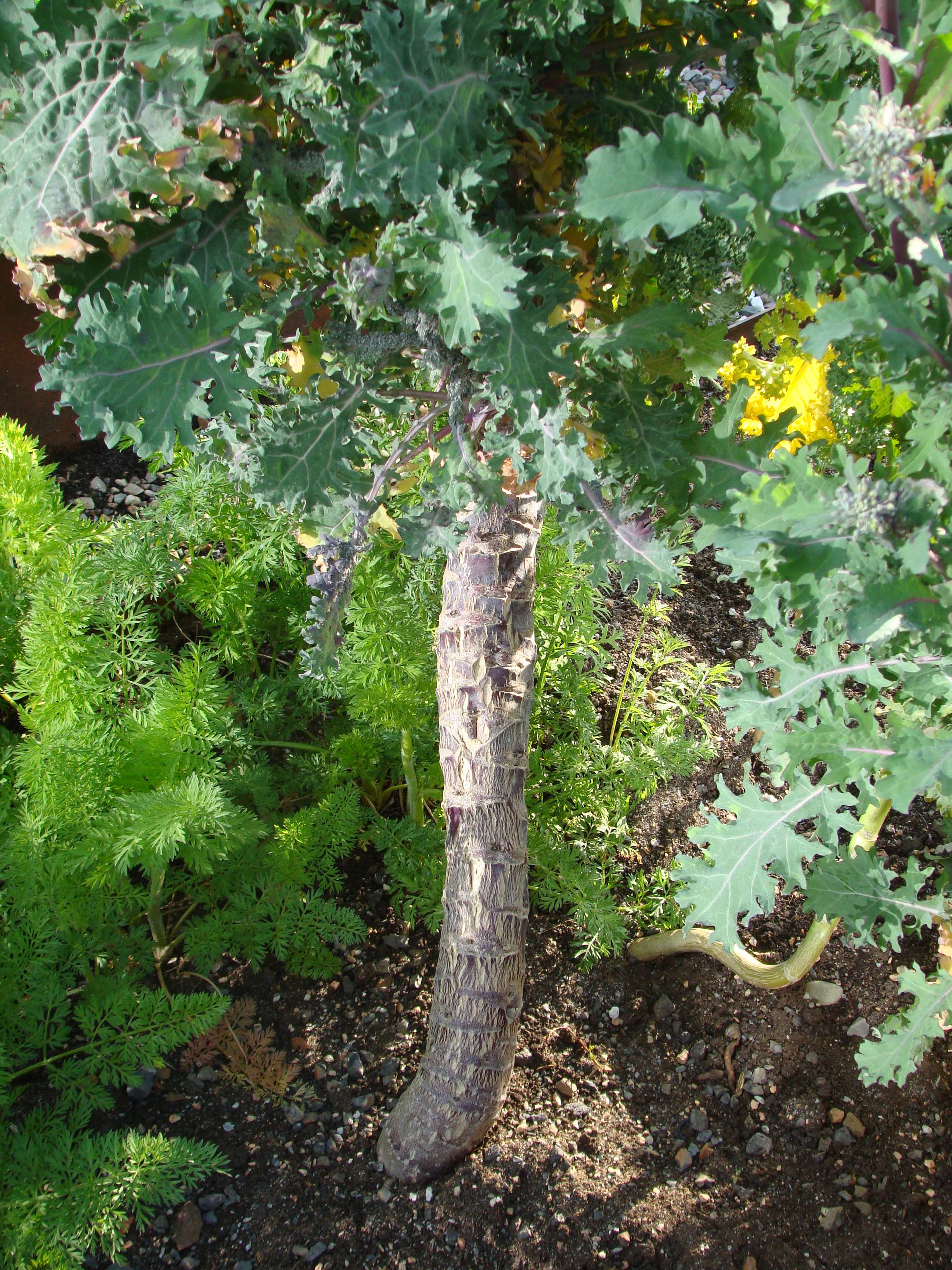
 As for the kale, it seems well on its way to becoming a tree, with a woody stem now 2″ in diameter,

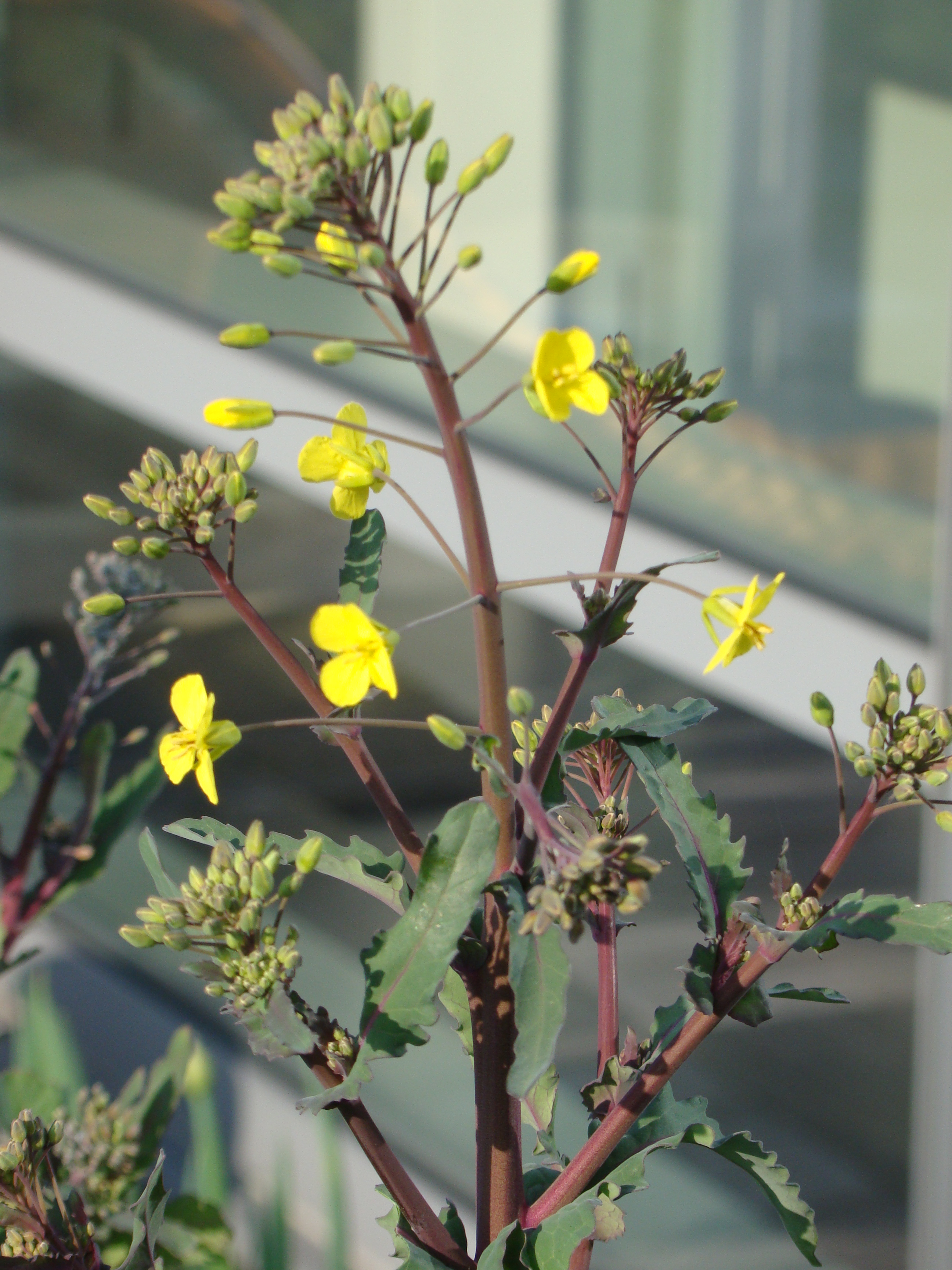
and flowers that are lovely to see, and sweet and soft to eat:

And all but the very oldest leaves cook up just fine:

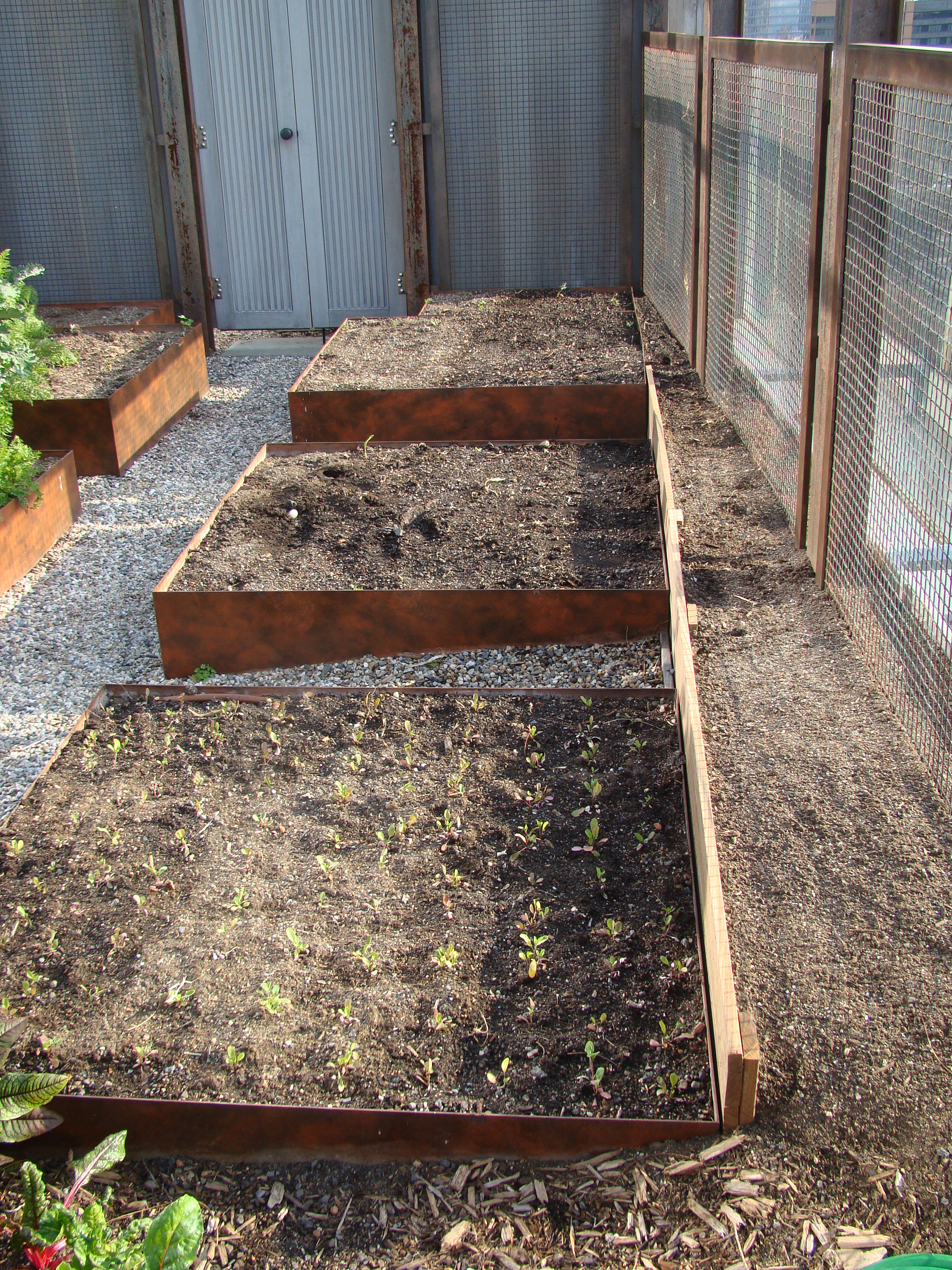
But of course gardeners must look forward and not back, and the east beds have been expanded and deepened this year, ready for an experiment to see if tomatoes grow well on the wire grid.   As you can see, spring lettuce, having been started in the cold frame, is already in the ground:

Posted in Carrots, Cooking and Eating, Herbs, Kale, Soil, Weather | 2 Comments

Up In The Air

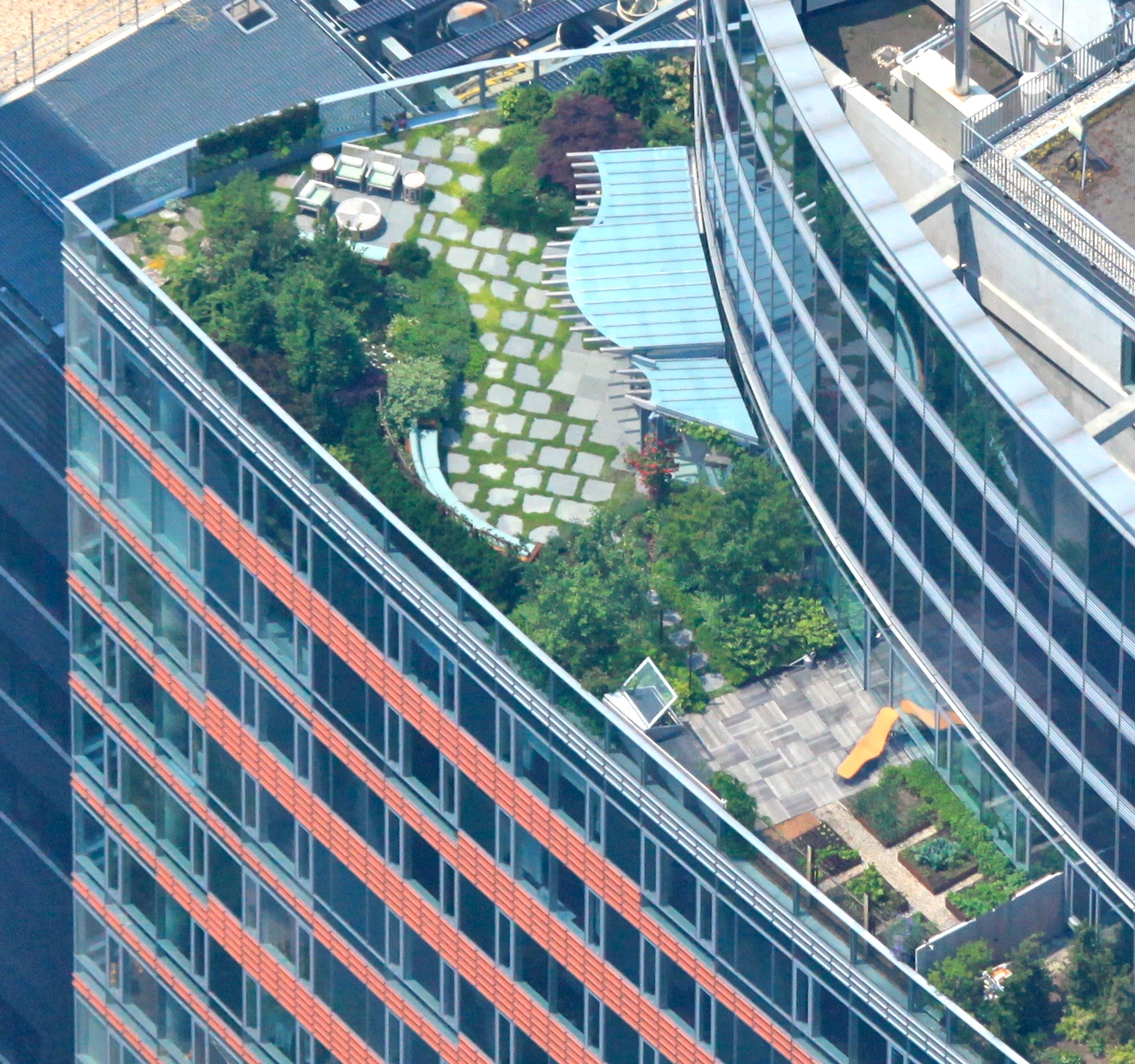
Although the Battery Rooftop Gardener spends too much time in airplanes (and has been said to bear a passing resemblance to George Clooney), this post is not about the pitfalls of excessive (or obsessive, in the case of Clooney’s character), travel.  This post is about looking at BRTG from up in the air:

In the photo above, taken by an accommodating helicopter pilot, the six “square-foot” beds and other vegetable growing areas sit at the north end of the garden (lower right above), facing south.  The berry patch (blueberries to the right and raspberries and blackberries to the left) sit just south of the wooden yoga terrace.  The orchard, and the herb “knot” to its south, separate the working north end from the more ornamental (but still food-centric) south end of the roof.   The grapes vines had just climbed to the top of the pergola when this photo was taken (in June of 2011).  The “secret” alpine garden sits at the top left of the photo.

They say that in real estate location is all, but farmers and gardeners know this to be the case for virtually anything that grows in soil.  The roof at BRTG catches full morning and mid-day sun, but starts to lose afternoon sun due to the tower of solar panels to the west of the roof.  It is surrounded on two sides by water, and not unduly crowded by other sun-stealing buildings:

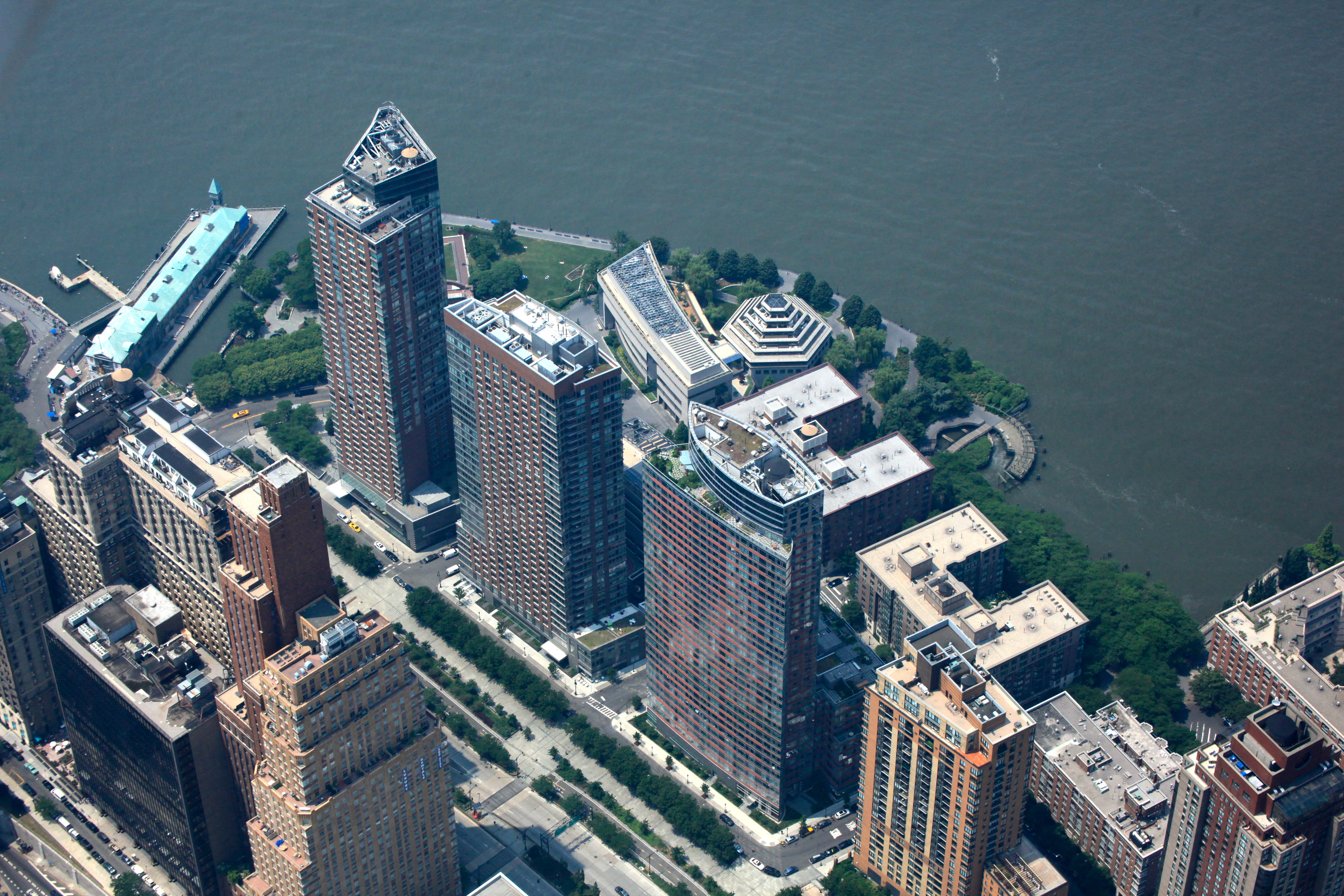
Zooming out a bit, you can see the historic fire boat pier at the top left, Robert Wagner Park at the south-west tip of the Island, and, from south (top) to north (bottom), the Ritz Carlton Battery Park Hotel and condominium, 10 Little West, and then the Visionaire topped by BRTG.   Seeing the proximity and “wrap” of the harbor and Hudson River, it is easier to understand the ameliorating effect of micro-climate discussed in my last blog.  

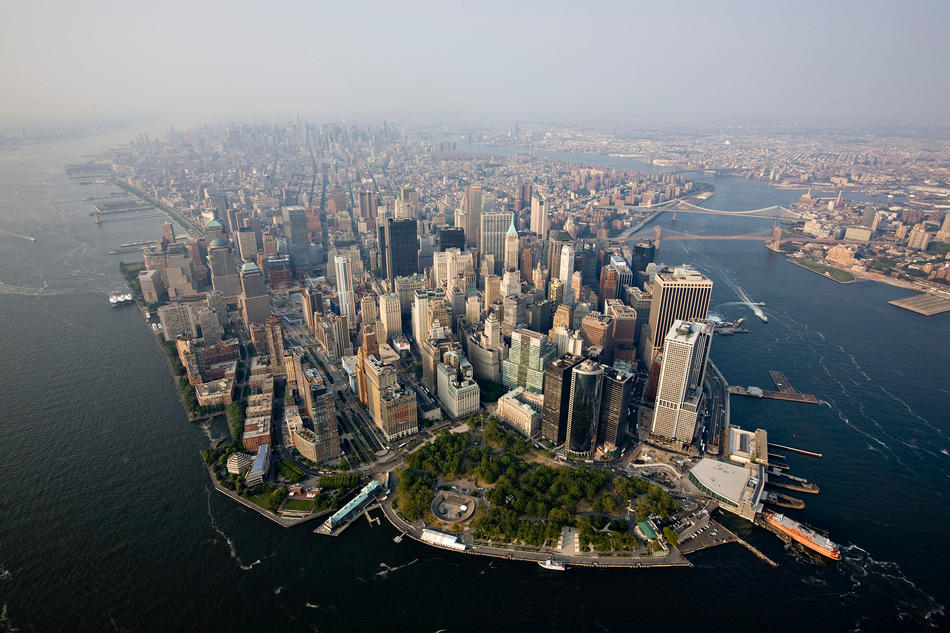
And finally, zooming out to examine the site of the garden from further south in the harbor, you can see that it is but a tiny airborne echo of Battery Park, the great green prow of Manhattan Island:


Posted in Uncategorized | 4 Comments

What zone is this?

One of the first things that gardeners learn is their plant hardiness zone, a helpful construct of the USDA based on the expected low winter temperature.   Plant and seed catalogs helpfully tell us the coldest zone in which a plant will survive the winter, i.e., the expected geographic limit of its hardiness.  Those of us in Zone 5, for example, are not supposed to try to grow plants supposedly hard only to Zone 7.

Newbie and chronically cautious gardeners follow this rule slavishly.  The rest of us, infected with the horticultural variety of the audacity of hope, consistently push the limits of hardiness, convinced that our microclimates or special skills will give birth to one of those not-so-rare gardening miracles, such as a plant that prefers the tropics nonetheless surviving for years in a New Jersey backyard.    In most cases, it’s not gardening skill that is the explanation, but microclimate. 

Microclimate refers to the particular environmental conditions in a specific place.   Higher places are colder and more exposed to the wind that low ones, although the bottom of small slopes can also be frost traps.  Places adjacent to large bodies of non-freezing water  are buffered from the extremes of very cold nights.  South facing walls hold and radiate back the winter sun.  You get the idea.

Last week, the USDA published, for the first time since 1990, a new and much-improved version of the plant hardiness map familiar to all gardeners (www.planthardiness.ars.usda.gov/) Climate change advocates, on both sides, argued about the obvious zone shift reflected in the map (average winter low temperatures increased in most zones).  But gardeners were thrilled at the new granularity in the digital, GIS-enabled interactive map, which is based on 30 years of actual temperature data from thousands of local weather stations, and computer manipulated to reflect differences over distances as short as 1/2 mile.  This meant that, for the first time, the effects of urban heat sinks, altitude and proximity to water would be reflected.

The Battery Rooftop Gardener was quite astonished to find that the BRTG has been promoted to Zone 7b, which means the average low temperature over the past thirty years was 5.8 degrees Farenheit, and ranged between 5 to 10 degrees.  This result is clearly driven by the immediate proximity of New York Harbor and the warming effect of the dense construction in downtown Manhattan, for just over the Hudson River — less than two miles away —  the inland portion of Jersey City transitions to Zone 7a (which is colder), and most of the land we see from the garden looking to the west, starting along a line that runs through West Orange and Milburn (New Jersey), falls to the significantly more frigid Zone 6b. 

What roof-top farmers want to know, and what the folks at the USDA haven’t yet told us, is what adjustment should be made, within a zone, if your garden is heated from below by a warm building, and sits at a considerable height above street level with the cooler temperatures and exposure to wind resulting from this altitude.   I’m guessing that BRTG is about 450 feet above sea level, and set out to find what adjustment to my new Zone 7b status should be made to account for this.

A small bit of research revealed that scientists use a rough guide to adjust for the effect of altitude on temperate — the rate of cooling, when the air is still and of uniform humidity, is referred to as the “environmental lapse rate.”  For the first 36,000 feet above sea level, this is 3.56 degrees Farenheit per 1,000 feet.  A quick bit of math reveals that the low temperature here on the roof would ordinarily be less than 2 degrees colder than on the ground.  Because this is a well-insulated LEED ‘Platinum’ building, I am guessing the heat leakage from below is minimal.  On the other hand, the exposure to high winds is quite extraordinary.  So, on balance, I have concluded that BRTG should be demoted one notch to Zone 7a.  I’ll take it. 

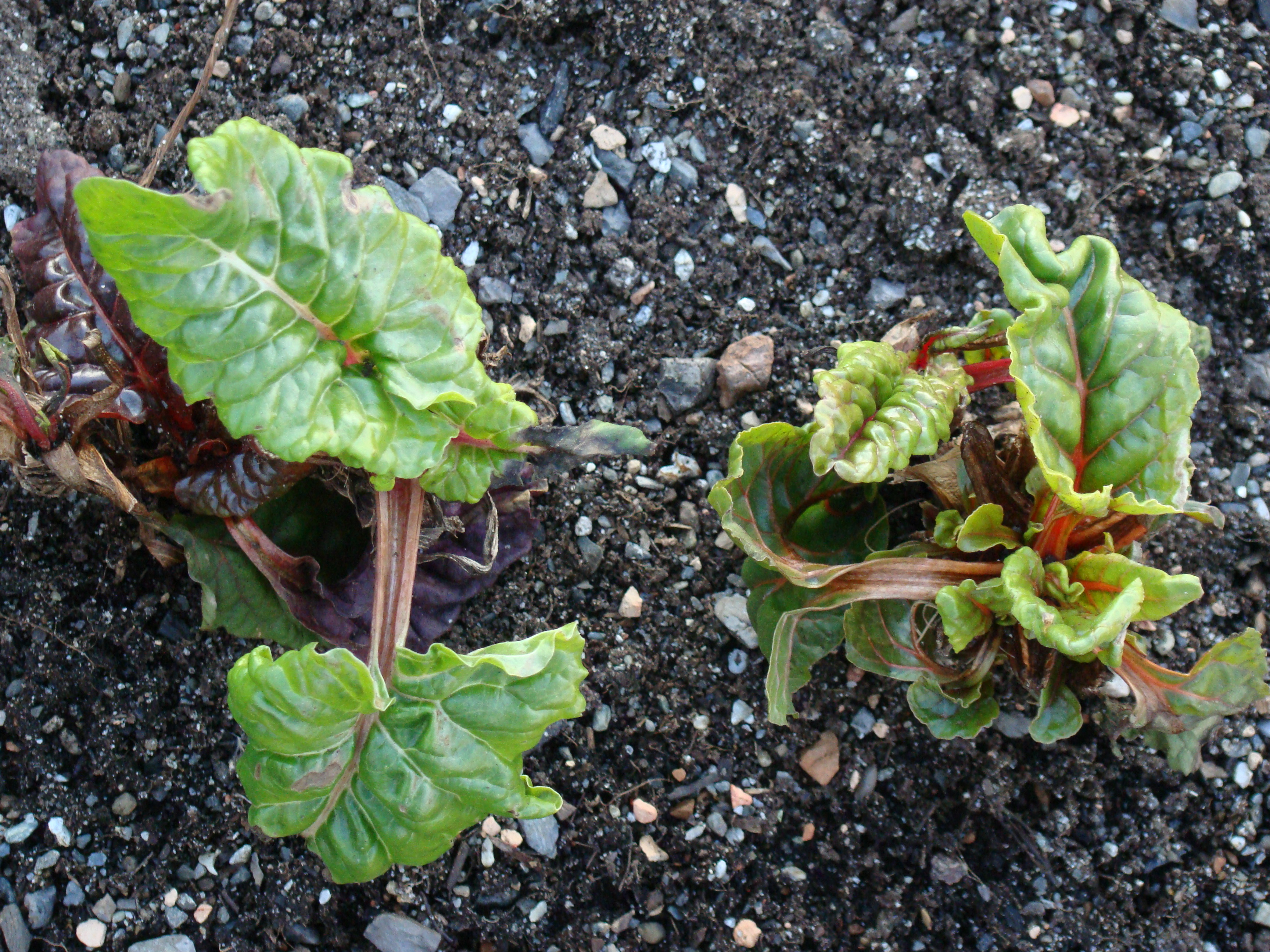
Here we are at the end of January, and this is what Zone 7a means for a winter roof-top garden, with irrepressible chard putting on fresh growth, and iron-clad kale refusing to acknowledge the seasons altogether.


Posted in Alpines in the Secret Garden, Chard, Kale, Ornamental Plants, Photos, Secret Garden, Weather | 3 Comments

A Tale of Two Sorrels

Plants are natural contrarians, delighting in bucking the conventional wisdom by growing in shade when they are said to require sun, becoming giants when they have been bred to remain dwarf in stature, and prospering in limey soil when the experts tell you that anything less than harsh acidity will be fatal.    This contrarian streak becomes more pronounced when plants find themselves adapting to life on the 35th floor of a sky-scraper in the Financial District of Manhattan, something for which they are ill-prepared by evolution. 

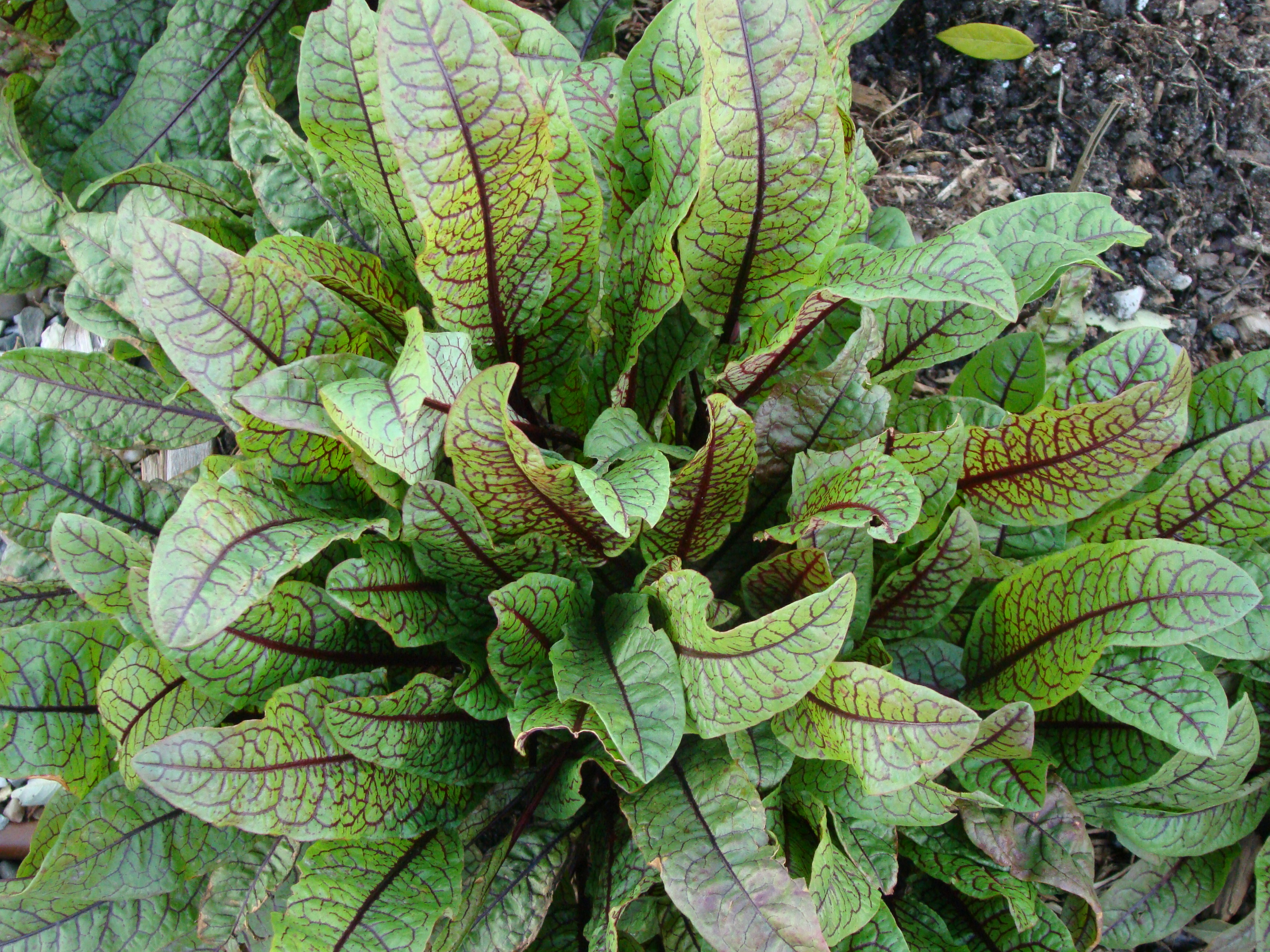
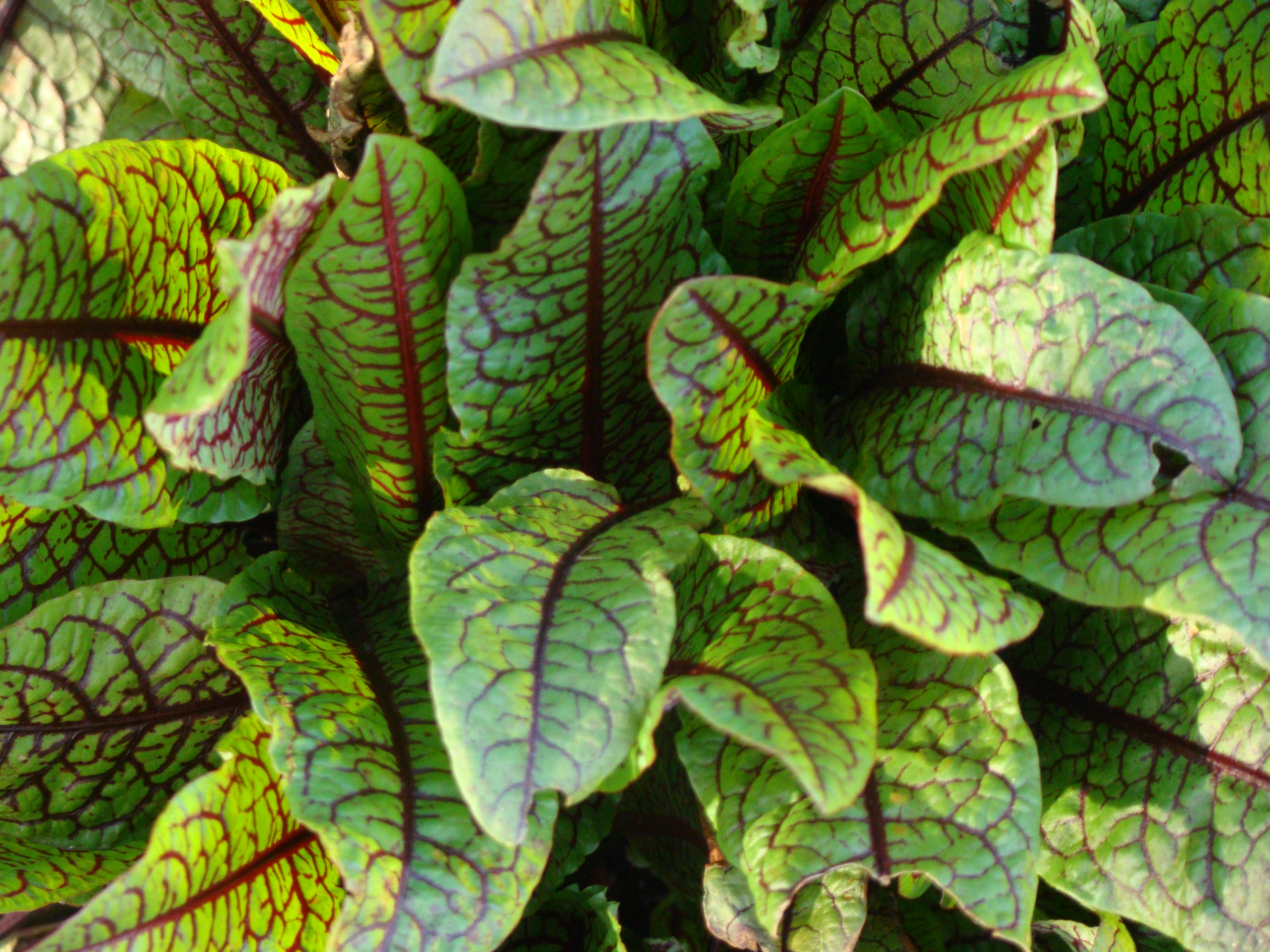
Take my Sorrels.   Two more hard-working plants would be hard to find.    The first, Rumex sanguineus, is called by its commercial promoters “Red-Veined Sorrel,” which the seed-catalog writers presumably determined was less of a deterrent than the traditional “Bloody Sorrel,” or even better, “Bloody Dock.”  She is a real showstopper:

The photo above is from mid-autumn.  And now, after two deep frosts, she has wilted not one bit, but her veins have thickened, deepened and darkened, as if to prepare for the rigors of winter on the roof:


Only a real connoisseur of bitter greens would enjoy the bloody thing raw, even in its mildest state during the height of summer.  And now, although maintaining her looks, she is distinctly bitterer  — suitable, if truth be told, only for cooking.  But she will anchor the front of the veggie patch beautifully all winter:


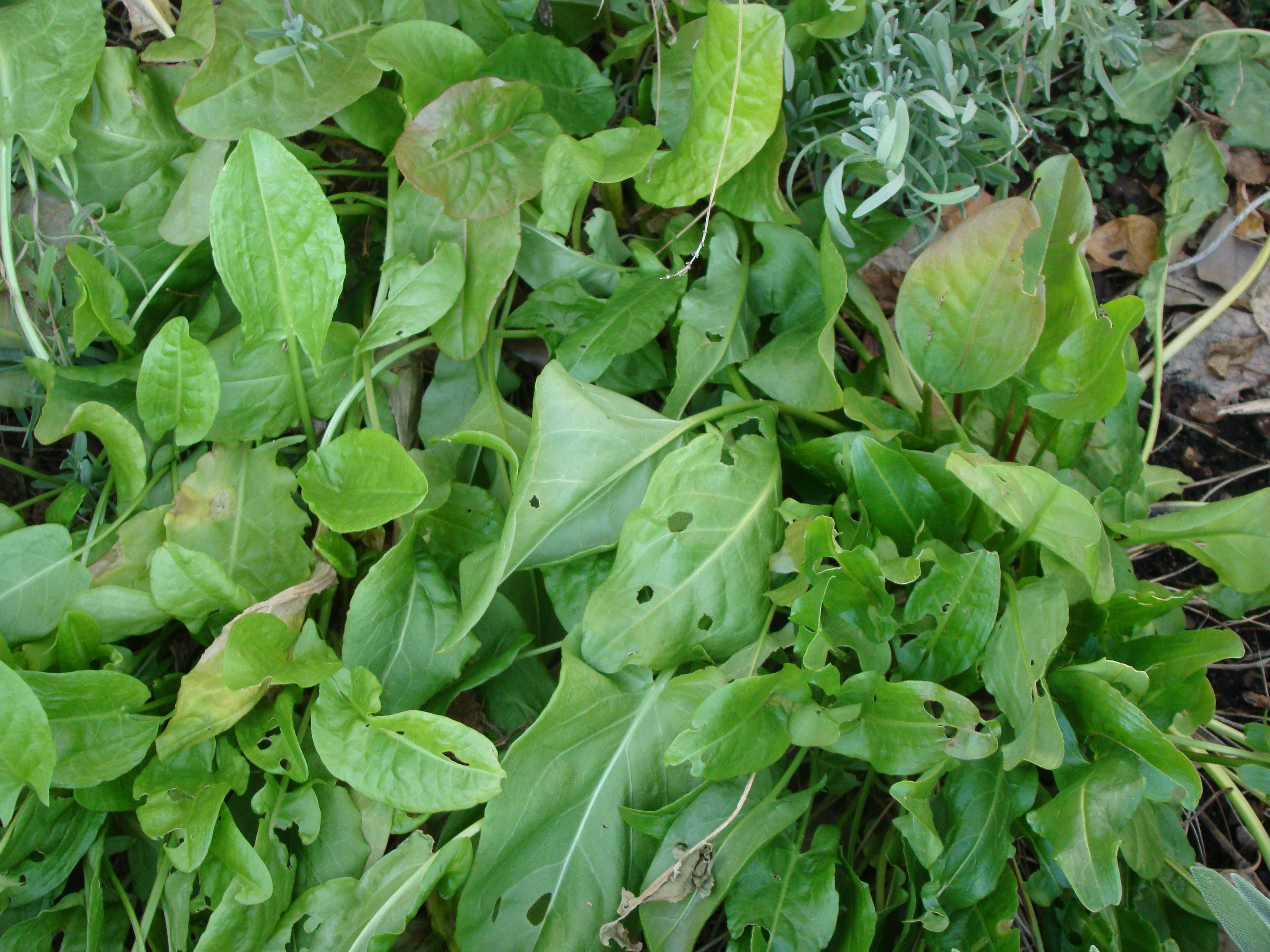
In contrast, Rumex acetosa is looking a little beat-up, but still delivers a wonderful lemon flavor to salads or soups:


I have been calling her “Lemon Sorrel,” but find little support for that name, which is correctly “Common Sorrel,” or incorrectly, “French Sorrel.”   Either way, she is supposed to peak in late spring, bolt and seed into a chaotic mess during the summer, and then retire from the field as an annual at the depth or our Zone 6 winters.    But no, not these plants.  They do bolt, but surrender to some aggressive cutting of the bolting stems and flowers, and revert for the balance of the summer to obedient production of delicate and flavorful leaves.  And rather than expiring as instructed under the assault of a terrible roof-top winter, she came back swinging last spring.

 I offer a holiday toast to the readers of this blog with this morning’s fresh batch of kale juice (rendered slightly more congenial by the addition of some sorrel and apple).

Your blogger is now retiring to the vessel below (seen from the green roof on her last visit to New York) for a couple of weeks to finish a book, but promises news from the cold frame in January.


Posted in Uncategorized | 2 Comments

Purple Haze

No friends, not the Jimi Hendrix song, and not the potent variety of Cannabis sativa ssp. sativa.  We’re talking carrots here. 

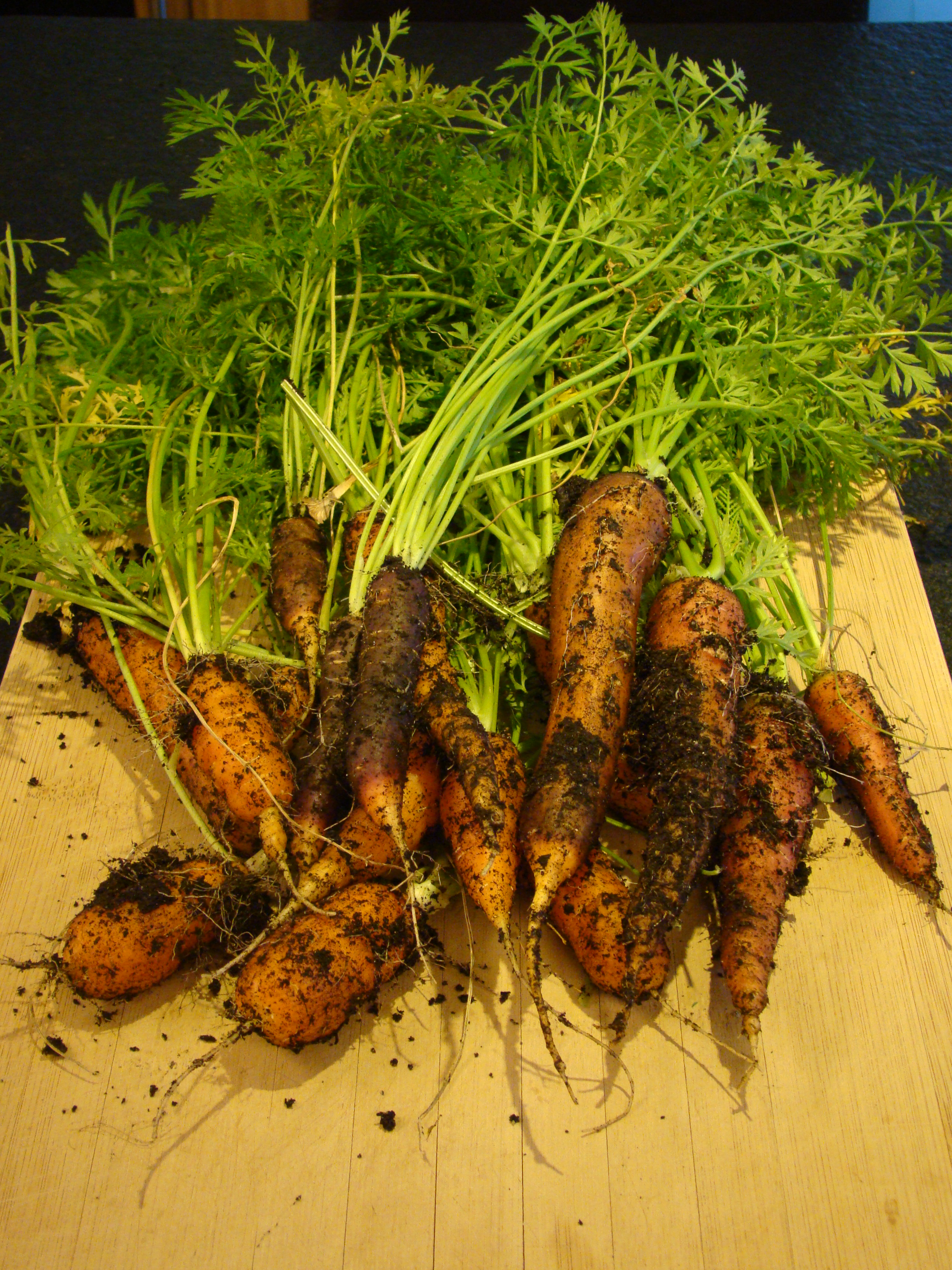
It is November 4, with one only one more day of daylight savings time remaining, a snow storm and light frost behind us, and warmer and dry weather ahead.   For BRTG this means continuing and abundant harvests of Malabar spinach, lettuce, scallions and onions, kale, chard, and . . . carrots:

I decided to introduce a competitive edge to breakfast by conducting a raw taste test among this morning’s harvest of sweet autumn carrots.  The competitors:  Scarlet Nantes, St. Valery, Purple Haze and Atomic Red.  The winner:


Daucus carota ‘Purple Haze’

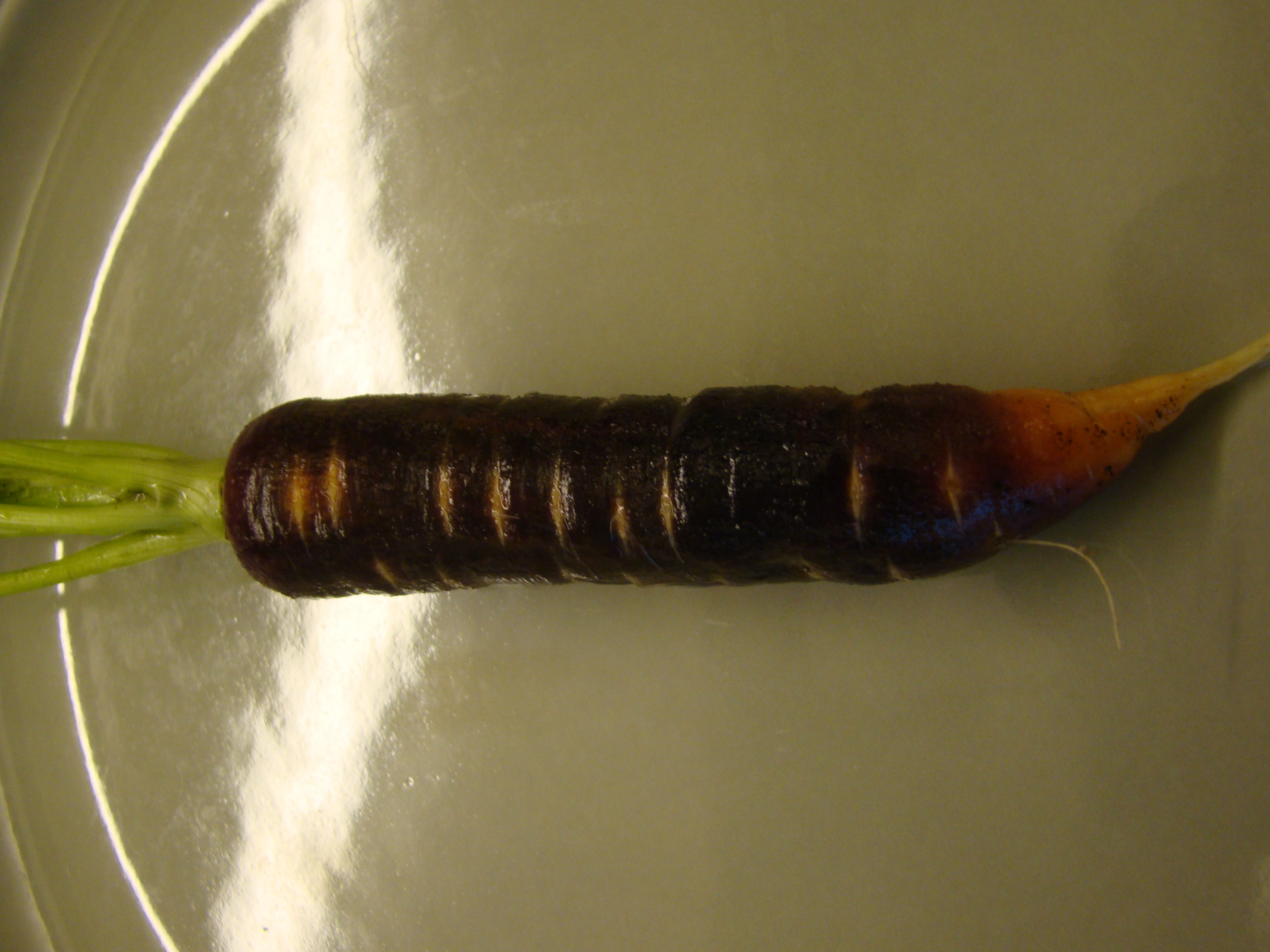
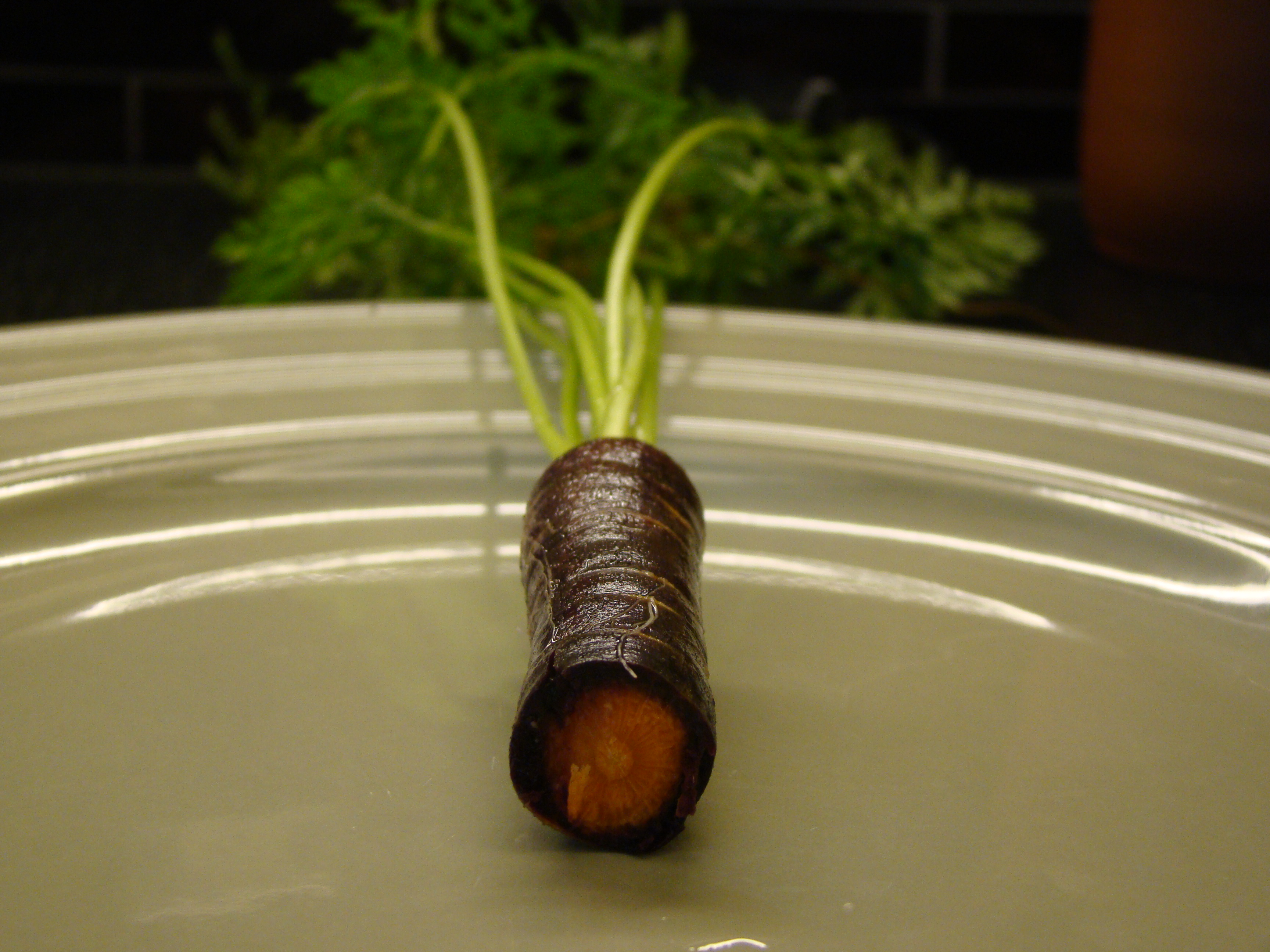
Purple Haze is an imperator-shaped carrot, with a beautiful muted purple exterior color, characteristic horizontal striations of white and yellow, and a surprising carrot-orange core:

As a raw breakfast treat, it is dry, with a sharp crunch, sweetness characteristic of carrots at this time of year, and a moderate carrot flavor.  The perfect breakfast.

Posted in Carrots, Photos | 4 Comments

Green Zebras

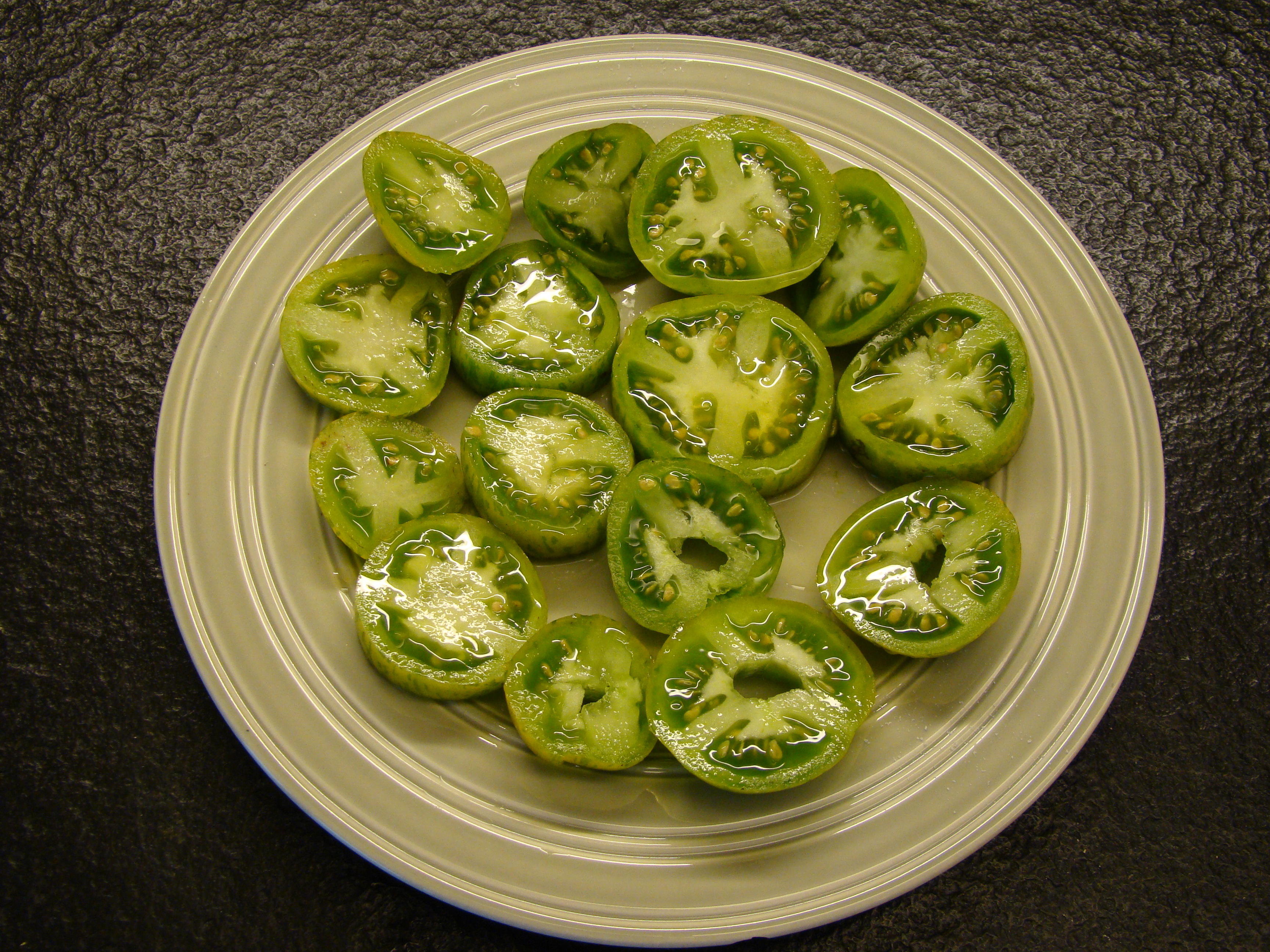
Neighbors, please don’t call animal control.  The Battery Rooftop Gardener’s determination to push the boundaries of green roofs has not turned in a zoological direction.   “Green Zebra” is a variety of tomato (Solanum lycopersicum) which, according to Seed Savers, was bred by Thomas Wagner of Tater Mater Seeds and introduced in 1983:   

Wager is a potato and tomato breeder from Everett, Washington who reportedly hybridized “Green Zebra” using four varieties of heirloom tomatoes, including “Evergreen,” a medium-size green tomato. Seed Savers describes it as having olive yellow 1½ – 2½” fruits with deep green zebra stripes, although I have never seen the olive yellow color.  Mine are green. 

The sometimes-reliable web reports that Alice Waters was responsible for popularizing “Green Zebra” by using it at Chez Panisse.  Perhaps.  What I do know is that it does offer a remarkable dialectic of sweet and sour; with the earlier harvest tending toward the tart side, and later harvest emphasizing the sweet.   

To be frank, I have had trouble determining when my “Green Zebras” are ready for harvest.  Two days ago, half of the tomatoes on my plate were inedible.  Today’s crop were picked last night by Melissa Metrick and were all perfectly ripe.  The secret, I believe, is to harvest by feel, seeking a slight “give” to the fruit and looking for the light green stripes to begin blushing yellow.

The pedant in me cannot resist a slight digression into question of whether “Green Zebra” should be considered an heirloom variety.  At first blush, as a variety bred in 1983, it would appear not.  But, not surprisingly, the matter is more complicated.  The best explanation of the meaning of “heirloom” in tomatoland comes from a chemist in North Carolina named Craig LeHoullier and a retired professor named Carolyn J. Male, who raises more than a 1,000 heirloom varieties in upstate New York.  They have classified heirlooms into the following four categories:

  1. Commercial Heirlooms: Open-pollinated varieties introduced before 1940, or tomato varieties more than 50 years in circulation.
  2. Family Heirlooms: Seeds that have been passed down for several generations through a family.
  3. Created Heirlooms: Crossing two known parents (either two heirlooms or an heirloom and a hybrid) and dehybridizing the resulting seeds for however many years/generations it takes to eliminate the undesirable characteristics and stabilize the desired characteristics, perhaps as many as 8 years or more.
  4. Mystery Heirlooms: Varieties that are a product of natural cross-pollination of other heirloom varieties.

The experts helpfully note that while all varieties considered “heirloom” are open-pollinated, not all open-pollinated varieties are considered “heirloom.”  So, is “Green Zebra” now a “created heirloom”?  Perhaps one of my readers will enlighten me. 

In the mean time, I can reliably report that – heirloom or not — they make a fine breakfast.

Posted in Cooking and Eating, Tomatoes, Vegetables | 2 Comments

A Rooftop Miscellaney

1.  Abundance

Yes, it’s that time of year when all produce gardens, even those 35 floors above Manhattan’s Financial District, are overwhelming their gardeners with abundance.   Last night, 11 scholars, amateurs and supporters of landscape studies gathered for an eight-course feast prepared by Jordan Colon and his brother.  First came a wonderful carrot soup prepared from these heirloom carrots just picked moments before hitting the pot:

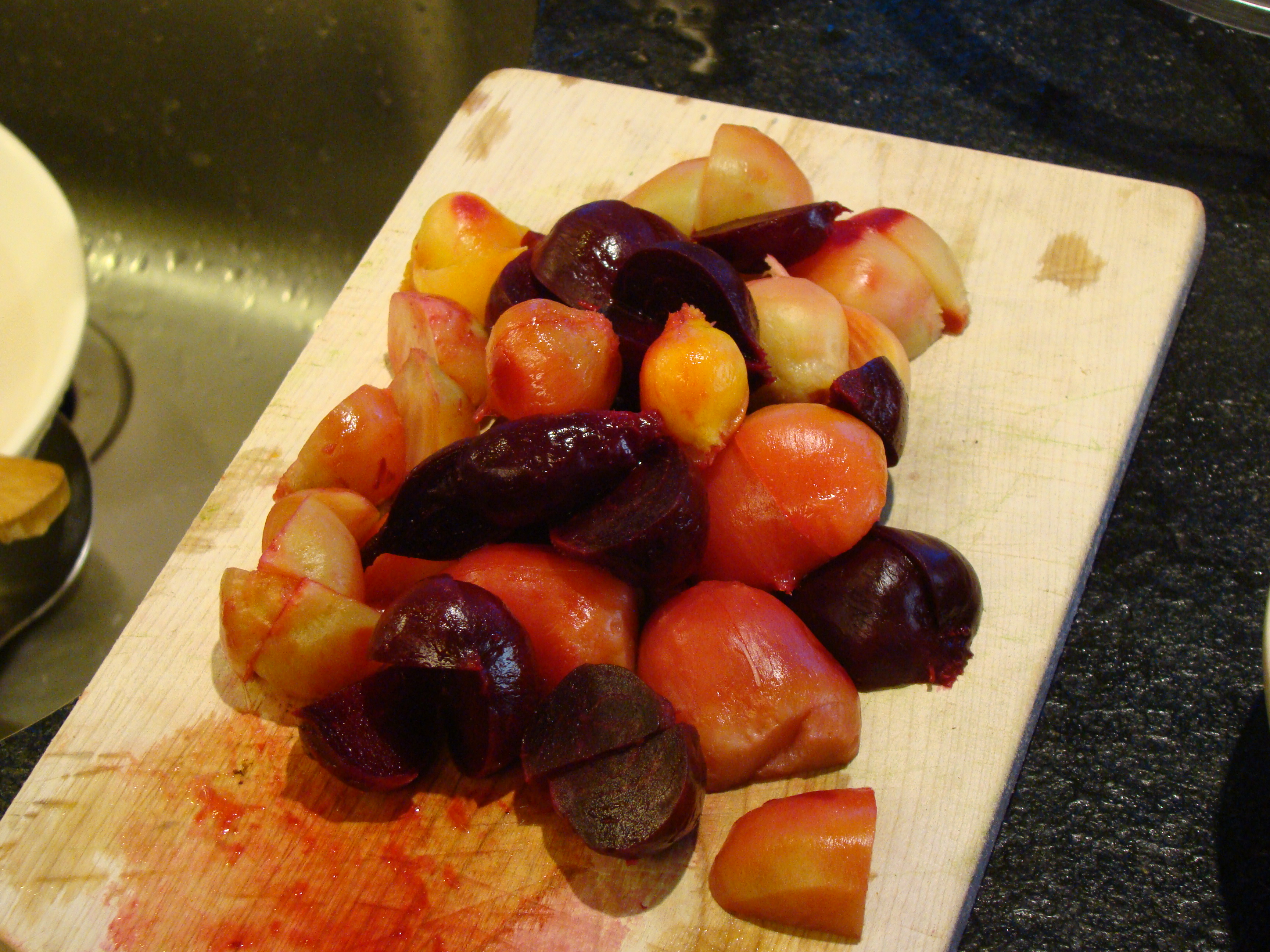
Next, a mixture of Chioggia, Detroit Red, Crosby’s Egyptian and Burpee’s Golden beets were roasted and served in a bed of their own greens:

This was followed by Swiss Card and carmelized onions garnished with chard stems stuffed with NY State goat cheese, accompanied by kale juice shots.    Fresh baked kale chips with sea salt completed the kale theme (or ordeal, perhaps, for some of my guests).  

Following this, Jordan rolled out a brilliant sorrel flan — thickly paved with tart lemony sorrel (eggs from Annie’s Eagle Street rooftop chickens) :

Then on to a polenta tart with just picked roasted eggplant tossed with three or four varieties (including Green Zebra) of variously sweet and tart tomatoes.   Having admired the Malabar spinach (see prior post), the guests were given a simple Malabar spinach salad dressed with a tiny bit of NY State apple cider vinegar.   The meal finished with just-picked-from-the-roof Asian pears accompanied by a faux creme anglaise fashioned from buckwheat and NY honey, garnished with the last of the Battery Rooftop Garden raspberries.   The perfect meal for a warm Indian summer night on the roof, with the guests serenaded by crickets (see post on panspermia). 

2.  9/11

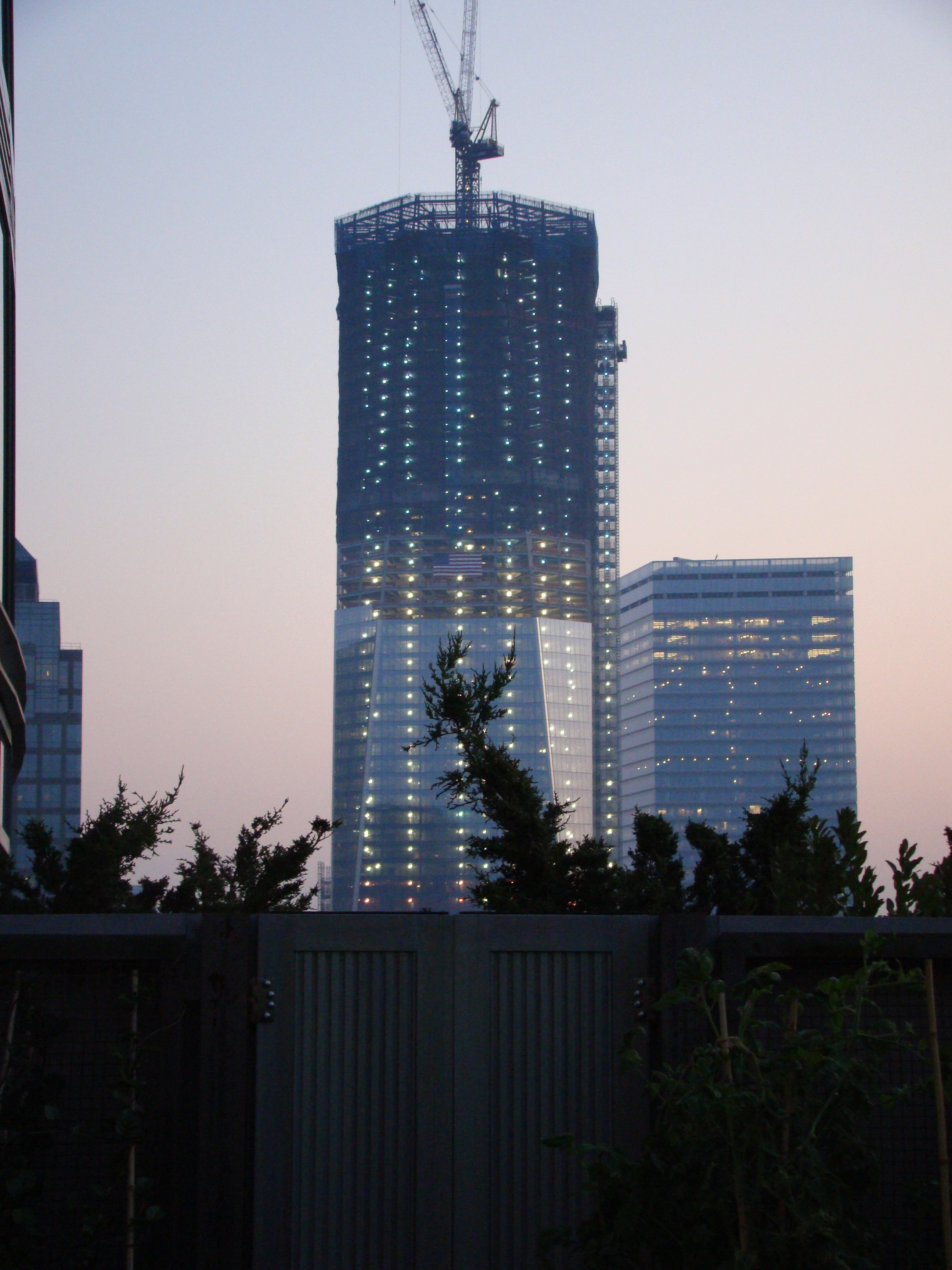
The Battery Rooftop Garden is only a few blocks from “ground zero,” and the new World Trade Center tower (formerly referred to as the “Freedom Tower”) is rising in direct alignment with the main axis of the garden:

And USS New York (LPD-21), a U.S. Navy SanAntonio-class amphibious transport dock ship,  came into the harbor for the 10th anniversary of 9-11, pausing dramatically at the foot of the garden:

The crew gathered on deck in awe of the rooftop orchard they had spotted off the starboard side of the ship:

3.  Yoga

Battery Rooftop Garden includes a yoga terrace, the only part of the outside space that is not green roof (i.e., there is no soil below the decking in this area).   One spends much time in yoga up-side down, and, when inverted, this is what you see:


Posted in Uncategorized | 3 Comments

Après le déluge

Plants on rooftop gardens are far more exposed to the elements than their ground-level cousins.   With Hurricane Irene heading directly for lower Manhattan, it was alarming to hear the experts explain that 75 mph winds at ground level translated to 100 mph winds toward the top of tall buildings.  So it was with some considerable trepidation that I secured the Battery Rooftop Garden last Friday.  I moved any movable object inside, and secured the few movable things remaining on the roof with strong cables.   I harvested all remaining nectarines, peaches and tomatoes, which I imagined would otherwise fly north and rain down upon bemused pedestrians in Soho.   I recorded for posterity the state of the vegetable garden, and retreated up-state. 

I am grateful to the many expressions of concern received from friends and readers.

And the result?  Well, judge for yourself.   Here is how things look après le déluge.   The Malabar spinach was looking extra glossy, perhaps reminded by the storm of its happier days growing in the tropics.  

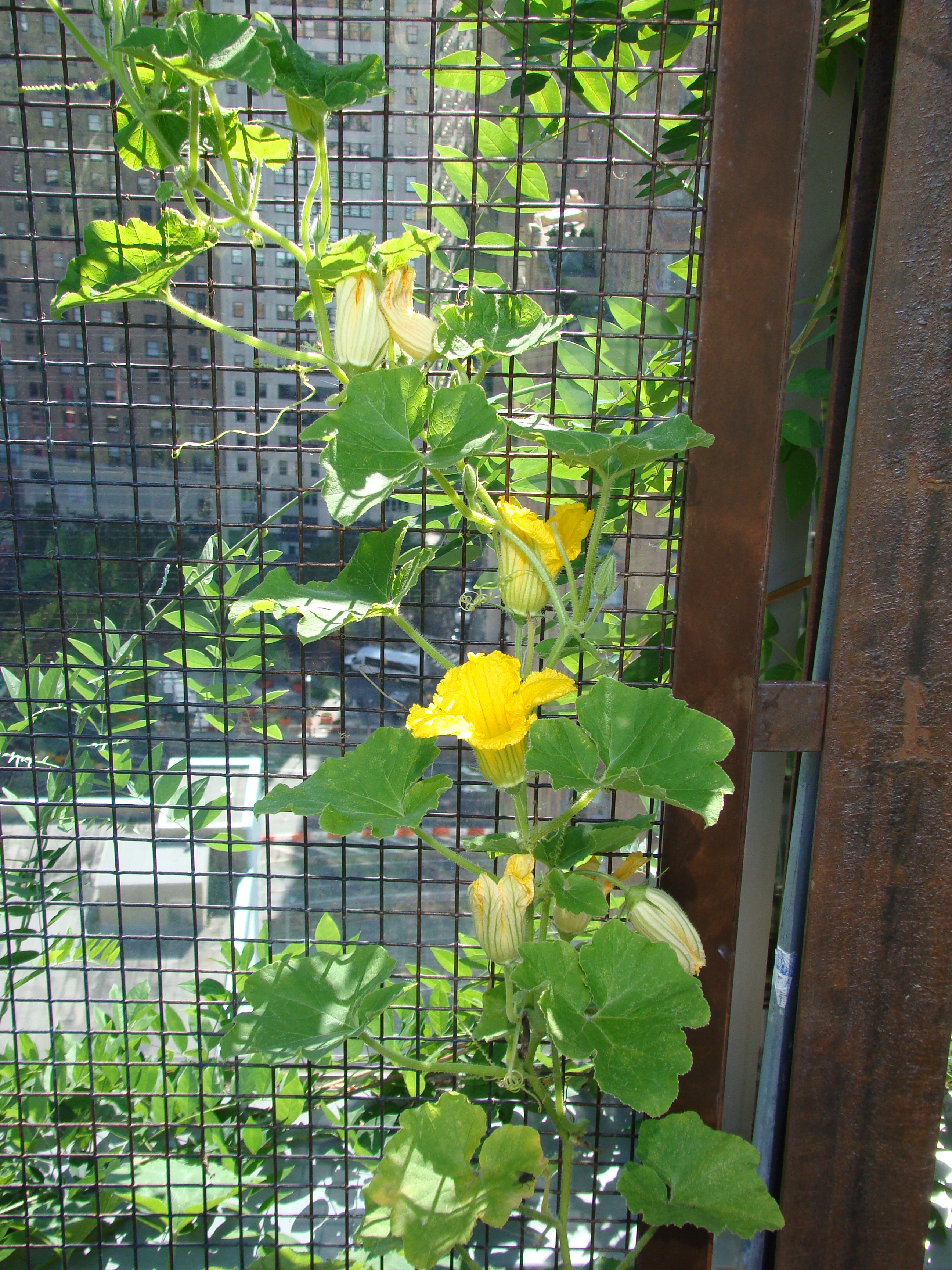
The ‘Green Zebra’ tomatoes hung on tight and were unblemished.  The summer squash remained recumbent, ready to harvest. The hardier winter squash was completely unperturbed, taking advantage of the extra water to put on a spurt of growth up the vertical screen.  Late raspberries, alas, were looking rather ragged, but hung on, and the few remaining dark ripe fruits were dazzlingly moist and sweet. 

And most surprisingly, the orchard showed that fruit trees really 


are well adapted for the strong winds and rooftop exposure.

And on the ornamental front, a rose blossom took refuge behind a steel beam of the pergola, and celebrated:

And I celebrated this morning with the best breakfast salad yet:  Malabar spinach, spicy Arugula, ‘Green Zebra’ tomatoes and a perfectly ripe and sweet yellow pepper.
Posted in Design, Failures, Malabar Spinach, Nectarines, Peaches, Photos, Roses, Structure, The Visionaire, Tomatoes, Weather | 4 Comments